
If your London sash windows rattle, leak air or leave the room cold beside the glass, the choice is usually between improving the existing window and adding an inner pane. Draught-proofing can be a sensible first step for air leakage. Secondary glazing can go further by adding another glazed layer, but the best option depends on the condition, construction and use of your windows.
The figures below are indicative estimates and illustrative planning scenarios, not guarantees. Performance and bill outcomes depend on the specific window, glass, seals, air gap, frame, installation, property, energy prices, weather and household behaviour.
The drafty-sash problem
Sash windows can lose heat in two different ways. Infiltration is uncontrolled air movement through gaps around the sashes, beads, pulley boxes, sill or frame-to-wall junction. Conduction and radiation are heat transfers through the glass and frame even when the window is closed. A repair or draught-proofing service may address some infiltration, while a secondary pane can also change the thermal behaviour of the glazed opening.
In an older Victorian or Georgian sash, the combined gaps can be substantial. The often-repeated comparison that they may add up to the size of a brick is best treated as an illustrative description of a very leaky opening, not a measurement of every sash window. A survey or careful inspection is more useful than a vivid rule of thumb.
The first checks are straightforward: look for movement at the meeting rails, worn or missing seals, loose putty, damaged cords, rot and gaps where the frame meets the reveal. Draught-proofing should support sound joinery, not conceal decay or prevent a window from opening safely.
Draught-proofing alone vs secondary glazing
What draught-proofing can do
Draught-proofing uses brush seals, compression strips or other appropriate details around moving parts and junctions. When correctly selected and fitted, it can reduce unwanted air movement and make a room feel more comfortable without changing the external appearance. It does not add a second pane, so it cannot be expected to deliver the same change in heat transfer through the original glass. Seals can also wear, move or need maintenance over time.
What secondary glazing can add
Secondary glazing is a separate internal frame and pane fitted behind the original sash. The resulting air space can act as an additional thermal buffer, and the inner frame can reduce air leakage through the overall opening when its seals and installation suit the window. Low-E glass may reflect some heat back towards the room; the benefit depends on the complete specification.
This makes secondary glazing one potentially strong option where the original windows are suitable for retention and the owner wants to address both draughts and cold glass. It is not the only possible route, and it is not automatically the right one: repair, ventilation, curtains, shutters, heating controls and other parts of the building may matter more in a particular property. The sash-window charm and draughts guide explores the retention question, while the sash-window heat-loss guide goes deeper into the wider performance discussion.
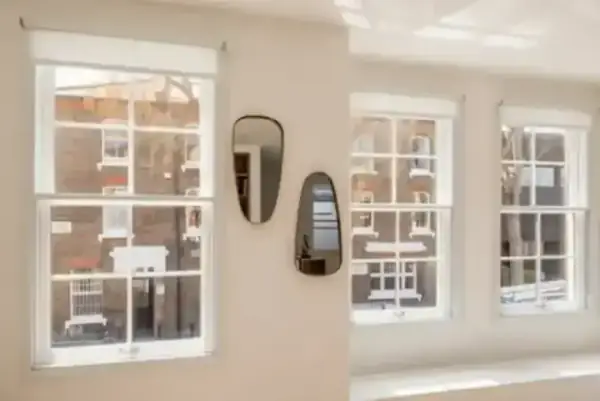
U-values in plain language
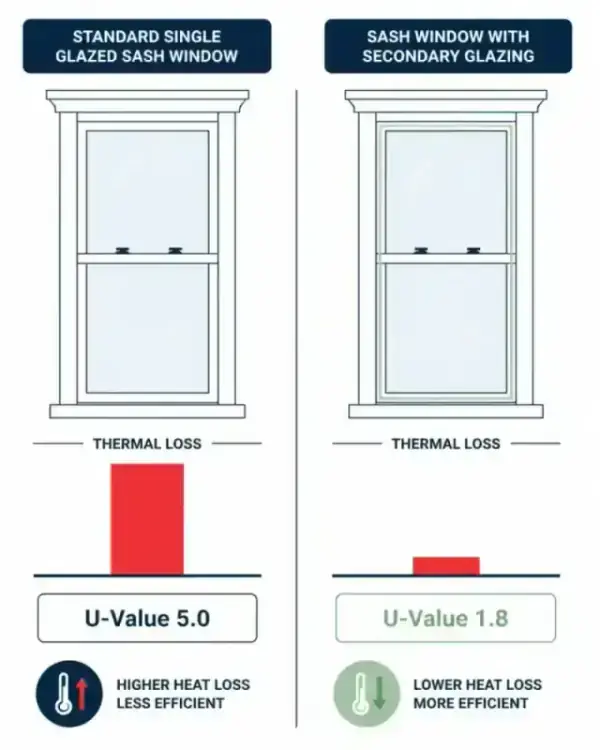
A U-value describes heat transfer through a defined construction: lower generally means less heat passes through that construction under the test conditions. It is not a whole-house energy-bill prediction. Original glass, frame, seals, air gap, Low-E coating, installation and the surrounding wall can all change the result.
The following are indicative typical ranges for particular window specifications, included to explain the direction of travel. They are not guaranteed results for every sash window.
| Window configuration | Indicative U-value (W/m²K) | Indicative air-leakage reduction |
|---|---|---|
| Original single glazing | Around 5.0 | Baseline; no assumed reduction |
| Single glazing plus draught-proofing | 4.8–5.0 | Around 33–50% in a specified comparison |
| Secondary glazing, standard glass | 1.8–2.5 | Around 85–95% in a specified comparison |
| Secondary glazing, Low-E glass | 1.2–1.5 | Around 95% or more in a specified comparison |
The table illustrates why draught-proofing and secondary glazing address different parts of the problem. Draught-proofing may change air leakage while leaving the original single glass in place. A secondary layer can change both the air path and heat transfer through the opening. On some specifications, that may improve window thermal performance by over 60%, but the percentage is an estimate for the tested or modelled construction, not a promise for your home.
For the wider building context, read the period-property energy-efficiency guide and the guide to meeting modern thermal standards without losing original windows. They cover more than the window decision made here.
Realistic bill savings
Windows can represent up to 25% of heat loss in some homes, but that is a typical or indicative upper-end estimate, not a fixed share of every London property. Walls, roofs, floors, doors, ventilation, heating controls and occupancy can change the balance substantially.
As planning estimates only:
- Draught-proofing: A few hundred pounds per window, with an estimated 5–7% reduction in an annual bill and an estimated 2–4 year simple payback in some scenarios. Actual costs, savings and payback can be higher or lower.
- Secondary glazing: Some project comparisons use an indicative 10–15% reduction in total heating bills. A £2,500 annual bill would make 15% equal to £375 in a simple illustration, not a forecast of what a household will save.
Energy prices, weather, thermostat settings, heating controls, ventilation and behaviour can outweigh a window-only estimate. An EPC rating may improve after suitable window work, but that is possible rather than guaranteed and depends on the assessment, the property and all the other inputs to the certificate. The 2026 energy-bills comparison provides a broader comparison; this article stays with the drafty-sashes decision.
Noise and comfort
The comfort difference can be as important as the energy calculation. Draught-proofing may reduce rattling and air movement, but it is not designed to create the same acoustic separation as an independent inner pane. Secondary glazing may reduce outside noise when the glass, frame, seals and air gap suit the source. Some estimates quote 70–80% reduction or up to 45 dB for particular systems, but those are indicative and not guaranteed outcomes.
Traffic frequency, glass mass, air-gap depth, perimeter seals and flanking paths through walls, floors, roofs, doors and vents all matter. Condensation can also change when an inner pane alters surface temperatures and air movement. Secondary glazing may reduce condensation on a warmer room-facing surface, but it cannot guarantee a dry cavity or condensation-free room; humidity and ventilation still need attention. The guide to three condensation mistakes after a window upgrade covers that separate issue in depth.
Planning note for London properties
An internal secondary-glazing proposal may be viewed favourably where it is discreet, reversible and leaves the external appearance unchanged. It is not automatically permitted in every conservation area or Grade II listed building. The answer is case- and authority-dependent: Article 4 Directions, local conservation policies, the significance of the window, fixings, shutters and the detailed installation can all change the position. Listed Building Consent (LBC) may still be required.
Always check with the local planning authority before ordering work, and ask separately about LBC if the building is listed. The listed-building secondary-glazing guide explains the broader consent questions. The guides to modern thermal standards and period-property energy efficiency are useful context, not a decision for your address.
Cost comparison
Draught-proofing is often the lower initial-cost intervention, but the price depends on the number and size of sashes, repairs, access, seal detail and finishing. Secondary glazing usually costs more because it adds a measured frame, glass, opening mechanism and installation. Costs for both options are property- and supplier-dependent.
Compare like for like: ask whether the quote includes repairs, preparation, glass, frame finish, survey, installation, making good, consent support and aftercare. The 2026 UK secondary-glazing cost guide explains those variables, and the honest London cost comparison helps when full replacement is also being considered. For a broader menu of options, use the window-insulation options guide.
Avoid adding headline percentages together. Draught-proofing may be useful before secondary glazing, but the combined result depends on what was already working and on the overlap between measures. The seven sash-window insulation mistakes guide explains why sealing one visible gap is not the same as assessing the whole opening.
A case-study style example
The following is a property-specific reported example, not a benchmark or promise for another home.
Property: A mid-terrace Victorian home in Fulham with eight original timber sash windows.
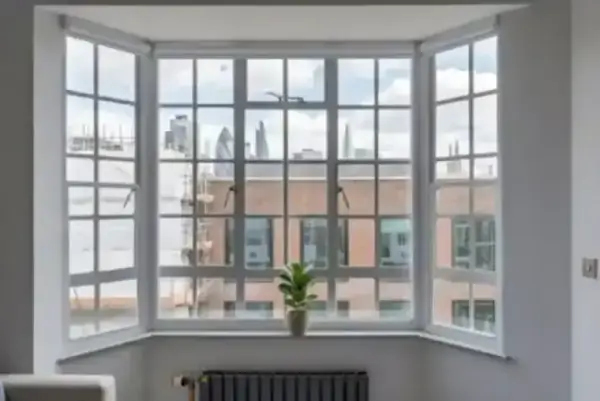
Challenge: The owners reported winter heating costs above £300 per month, while a north-facing bay window left the living room difficult to heat.
Solution: Bespoke horizontal-sliding secondary glazing with Low-E thermal glass was installed.
Reported result: The living room stayed around 20°C with the radiator on a lower setting. Gas consumption was reported to have fallen by 14% against the previous winter after adjustment for degree days. The owners also reported that the constant hum from nearby New King’s Road was no longer intrusive.
Those observations belong to that property, specification, weather period and household behaviour. They should not be treated as a guaranteed temperature, bill reduction, noise result or payback period elsewhere. For a practical route to lower London heating demand without replacement, see the London sash-window heating-bills guide.
Which option should you investigate?
Choose the next step from the problem you can actually identify:
- Mostly air movement: Start with a condition and draught-proofing assessment. Check that the sashes remain safe to open and that repair is not needed first.
- Cold glass as well as draughts: Compare a measured secondary-glazing specification with draught-proofing and other options. The modern thermal standards guide explains the wider retention context.
- Noise as a major concern: Ask what glass, air gap and seals are proposed, and what evidence applies to your noise source. Do not rely on a percentage from a different window.
- Rot, leaks or structural movement: Address the primary window and the building defect before choosing an insulation layer.
The decision is rarely just “cheap seals versus a guaranteed saving”. It is a choice between interventions with different costs, comfort effects, maintenance needs and heritage implications. The energy-saving mistakes guide for period-property owners is a useful whole-building companion.
FAQ
Are drafty sashes the main cause of high London energy bills?
They may be an important source of discomfort and heat loss, but the share varies by property. Walls, roofs, floors, doors, ventilation, heating controls, energy prices and behaviour also affect bills. A window assessment can identify whether air leakage or cold glass is the larger issue.
Is draught-proofing enough for sash windows?
It may be enough when the main defect is uncontrolled air movement and the original glass is acceptable for the room. It will not add a second thermal layer, so a colder room-side pane or outside noise may remain. Treat savings and payback as estimates for the particular window.
Is secondary glazing the only way to create a significant thermal barrier?
No. It is one potentially effective way to add a separate internal layer while retaining suitable original windows. Repair, draught-proofing, curtains, shutters, heating controls and other fabric improvements may also be appropriate. The right combination depends on the property and the owner’s priorities.
Will secondary glazing lower my heating bills by 10–15%?
It may contribute to lower heating demand, and 10–15% is sometimes used as an indicative project estimate. It is not a guaranteed bill reduction. The result depends on the window specification, property, energy prices, weather, heating settings, ventilation and behaviour.
Will it improve my EPC rating?
It may improve an EPC rating if the installed specification and the rest of the property support a better assessment. An improvement is possible, not guaranteed; only an assessment of the actual dwelling can establish the outcome.
Is secondary glazing allowed in a conservation area or Grade II listed building?
It may be acceptable in some cases, particularly where the proposal is internal and reversible, but there is no blanket approval. Article 4 Directions, local policies, significance, fixings and the detailed design can change the answer, and LBC may still be required. Always check with the local planning authority.
Where can I compare the wider period-home options?
Use the window-insulation options guide for a broader shortlist, the period-property energy-efficiency guide for whole-building context, and the listed-building guide for heritage questions. This article remains focused on drafty sashes versus secondary glazing for London energy bills.
Make the next step a measured one
If the original sashes are sound enough to retain, a survey can separate repairable draughts from heat transfer through the glass and show whether an inner pane is practical. Ask for the assumptions behind any U-value, noise, saving or payback figure, and keep the planning position specific to your property.
For a considered recommendation, arrange a measured survey with SecondaryDoubleGlazing. For more practical guidance, browse the window notebook. The right outcome is a warmer, more comfortable room designed around the window you actually have.