
Living in a Victorian terrace, Georgian townhouse, or Edwardian semi is wonderful: until the heating bills arrive. Period properties are notoriously energy-hungry, with some losing up to 40% more heat than modern homes. But don't despair. With the right approach, you can dramatically improve your home's energy efficiency while preserving its historic character.
The secret is understanding where your period property loses heat and tackling improvements in order of impact. Let's explore practical, proven methods that work specifically for older homes.
Why Period Properties Are So Cold
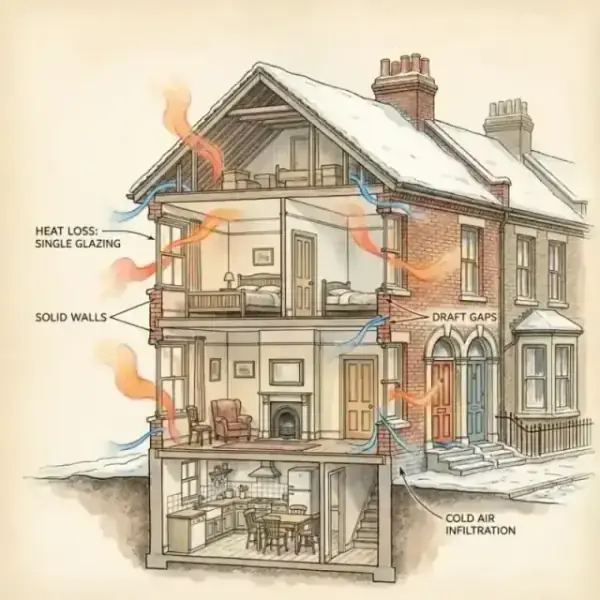
Period properties face unique energy challenges that modern homes simply don't have. Understanding these helps you prioritize your improvements effectively.
Single-glazed windows are the biggest culprit. Most period homes still have their original windows, which can lose 10-20% of your home's heat. Unlike modern double glazing, single-glazed sash windows offer virtually no insulation barrier.
Solid wall construction is another major issue. Homes built before the 1920s typically have solid brick or stone walls with no cavity insulation. These walls can be 50-60% less energy efficient than modern cavity walls.
Poor draught sealing around windows, doors, and floorboards creates constant air leakage. Period properties weren't built with airtightness in mind: quite the opposite, as ventilation was considered essential for health.
High ceilings and large rooms mean more air to heat, while original fireplaces (often blocked but not properly sealed) create upward heat drafts that pull warm air straight out of your home.
Quick Wins: Low-Cost, High-Impact Solutions
Start with these affordable improvements that deliver immediate results:
Draught Proofing
Sealing gaps around windows and doors can reduce heat loss by 15-20%. Use brush strips, foam strips, or professional draught excluders around door frames. For windows, consider temporary solutions like draught-excluding tape during winter months.
Heavy Curtains and Thermal Linings
Thick, well-fitted curtains can reduce heat loss through windows by up to 25%. Choose curtains that extend below the windowsill and fit snugly against the wall. Thermal lining adds extra insulation without changing the curtain's appearance.
Carpet and Rugs
Period properties often have suspended timber floors with gaps underneath. Adding carpet with good underlay or large rugs creates an insulation barrier and reduces draughts coming up through floorboards.
Radiator Reflectors
Place reflective foil behind radiators on external walls to bounce heat back into the room rather than letting it escape through the wall. This simple addition can improve radiator efficiency by 10-15%.
Medium Investment Solutions
These upgrades require modest investment but deliver substantial long-term savings:
Secondary Glazing
This is often the most effective upgrade for period properties. Secondary glazing involves installing a second window internally, creating an insulating air gap while preserving your original windows completely.
Modern secondary glazing systems can reduce heat loss by up to 70% while significantly reducing noise pollution: a bonus for urban period properties. Unlike replacement double glazing, secondary glazing works with any window style and doesn't require planning permission in most cases.
For Victorian properties with tall sash windows, secondary glazing is particularly effective as it creates a large insulating air barrier. Similarly, Georgian homes with their characteristic proportioned windows see dramatic improvements in both thermal and acoustic performance.
Modern Heating Controls
Install programmable thermostats, thermostatic radiator valves (TRVs), and smart heating controls. These allow you to heat only the rooms you're using and maintain consistent, comfortable temperatures. Proper heating controls can reduce energy consumption by 15-30%.
Loft Insulation Upgrade
If you have loft access, upgrading to 270mm of loft insulation (current building regulation standard) is cost-effective and delivers quick payback. Choose breathable materials like sheep's wool or recycled newspaper that won't trap moisture: crucial for older buildings.
Major Upgrades for Maximum Impact
These require significant investment but transform your home's energy performance:
Internal Wall Insulation
Since external insulation changes your property's appearance (and may require planning permission), internal wall insulation is often the only option for period properties. Modern systems use slim insulation boards that minimize room size reduction while dramatically improving thermal performance.
Internal insulation can reduce wall heat loss by 60-70%, but requires professional installation to avoid moisture problems. The investment typically pays back within 10-15 years through reduced heating bills.
Modern Condensing Boiler
Replacing an old boiler with a modern A-rated condensing boiler can reduce your heating bills by 25-35%. Modern boilers are 90-95% efficient compared to 60-70% for older systems. Choose a system-size appropriate for your property and consider smart controls for optimal efficiency.
Heritage Property Considerations
If you own a listed building, additional planning considerations apply. Listed building consent is required for most alterations, but many energy efficiency improvements are possible with the right approach.
What Usually Gets Approval:
- Secondary glazing (doesn't alter the original window)
- Internal insulation (if properly designed)
- Loft insulation using breathable materials
- Draught proofing using reversible methods
- Heating system upgrades (if existing system locations are used)
What Often Requires Special Consideration:
- External wall insulation (changes building appearance)
- Window replacement (rarely approved for Grade I or II properties)
- Solar panels (depends on location and visibility)
Properties in conservation areas have fewer restrictions than listed buildings but still require planning permission for external changes. Secondary glazing is usually straightforward to approve as it doesn't alter the building's external appearance.
Work with professionals experienced in heritage properties. They understand how to achieve modern efficiency standards while respecting conservation requirements and can often suggest creative solutions that satisfy both energy performance and planning conditions.
Cost-Benefit Analysis: What to Prioritize
Here's how to prioritize improvements based on cost and impact:
Highest Return on Investment:
- Draught proofing – £200-400 investment, 15-20% heat loss reduction
- Loft insulation – £400-800 investment, 20-25% heat loss reduction
- Secondary glazing – £400-800 per window, 60-70% window heat loss reduction
Medium-Term Payback:
4. Internal wall insulation – £8,000-15,000, 25-30% total heat loss reduction
5. New boiler – £3,000-5,000, 25-35% heating bill reduction
Long-Term Investment:
6. Renewable energy systems – £8,000-15,000, varies by system and usage
For Edwardian properties with their mix of large windows and reasonable insulation, focus on window improvements first. Victorian terraces often benefit most from a combination approach: draught proofing, secondary glazing, and heating upgrades.
Creating Your Action Plan
Year One – Quick Wins:
Start with draught proofing, heavy curtains, and basic heating controls. These improvements require minimal disruption and deliver immediate comfort improvements.
Year Two – Window Solutions:
Invest in secondary glazing for your main living areas first, particularly south-facing rooms where you spend most time. The thermal and acoustic improvements will be immediately noticeable.
Year Three – Major Upgrades:
Consider wall insulation, heating system upgrades, or renewable energy systems. By this point, you'll have a good understanding of your property's performance and can make informed decisions about major investments.
Planning Permission Timeline:
If you need planning consent (for listed buildings or conservation areas), factor in 8-12 weeks for applications. Start this process early, particularly for more complex installations.
The key is taking a systematic approach rather than trying to do everything at once. Each improvement builds on the previous ones, creating a cumulative effect that transforms your period property into a comfortable, efficient home while preserving its historic character.
Remember, energy efficiency improvements aren't just about reducing bills; they're about creating a more comfortable living environment and often increasing your property value. With careful planning and the right professional guidance, your period property can be both beautiful and energy efficient.