
If you are asking is secondary glazing worth it?, the measured answer is: it can, particularly in a period home where the original sash windows are sound enough to retain but still draughty or uncomfortable. An independent inner pane may improve the window’s thermal performance, reduce some heat transfer and make outside noise less intrusive without changing the building’s external character.
The figures in this article are indicative estimates and planning scenarios, not guarantees. The result depends on the specific window, glass, seals, air gap, installation, property, heating behaviour, energy prices and—when property value is discussed—local market conditions.
The short answer: when secondary glazing may be worth it
Secondary glazing is often worth investigating when you want to keep original sash windows, live with noticeable draughts or cold glass, and improve comfort without committing to full replacement. It is a less clear fit when the primary window is rotten, the reveal cannot accommodate a suitable unit, ventilation has not been considered, or another part of the building is the larger source of heat loss.
This is a decision guide, not a promise of a particular bill reduction. For a side-by-side discussion of the alternatives, use our 2026 secondary-glazing versus double-glazing comparison; this article stays focused on whether the investment makes sense for your home.
What the upgrade can and cannot do
- It may improve comfort: a well-fitted inner layer can reduce draughts and make the room-side surface feel warmer.
- It may reduce heat demand: the effect depends on the window and the whole property, not glass alone.
- It does not repair the original window: rot, failed putty, damaged cords, leaks or unsafe operation should be addressed separately.
- It does not remove every noise path: walls, roofs, floors, doors and vents can also carry sound.
Thermal performance and U-values
A U-value describes heat transfer through a defined window construction; a lower value generally indicates less heat transfer through that construction. It is not a prediction of your whole-house energy use. The table below keeps the original comparison ranges, but treats them as indicative estimates that can move with the original glass, frame, Low-E coating, seals, air gap, installation and surrounding wall.
Indicative U-value table
| Window approach | Indicative U-value (W/m²K) | How to interpret it |
|---|---|---|
| Original single glazing | About 5.4–5.8 | Broad reference range; draughts and frame condition can add to discomfort |
| Secondary glazing, standard glass | About 2.4–2.7 | May lower heat transfer when the inner frame and seals suit the opening |
| Secondary glazing, Low-E glass | About 1.7–1.9 | May improve window-level performance further in a suitable configuration |
| Modern slimline double glazing | About 1.4–1.6 | Window-level reference for a defined replacement unit, not a whole-property result |
These ranges should not be converted into a guaranteed percentage improvement or heating-bill outcome. Walls, roofs, doors, ventilation, thermostat settings, occupancy and other windows may matter as much as the glazing. For the common ways a wider retrofit can go wrong, see the guide to energy-saving mistakes period-property owners make. For the standards and fabric-first context, read our period-home thermal standards guide.
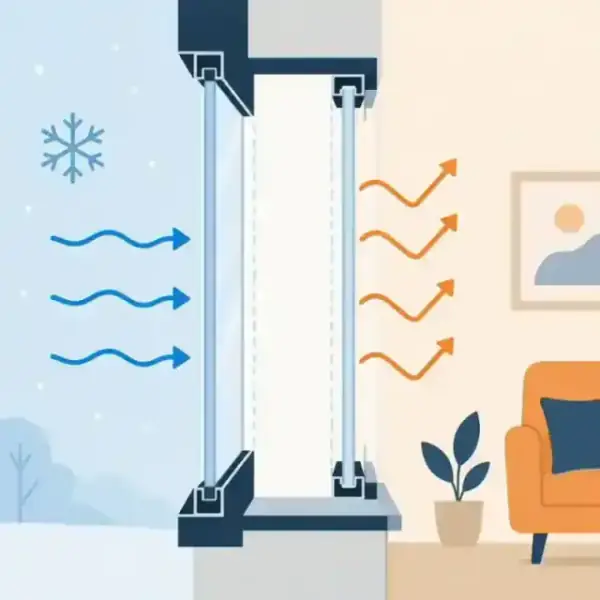
Secondary glazing and heating bills in 2026
Energy prices change, so the Ofgem price cap should be treated as a moving reference rather than a fixed household bill. Figures such as the original article’s £1,750–£1,930 range for a typical household are time-specific indicative context, not a current tariff or a prediction for your home. Ofgem updates the cap over time; check the current cap before using any price-cap figure in your own calculation, and remember that actual costs also depend on usage, region, payment method and tariff.
For a suitably sized home with suitable single-glazed windows, the original planning scenario described a possible 15–20% reduction in space-heating demand and roughly £140–£180 a year in gas-bill savings at the energy prices assumed at the time. Those figures are indicative estimates only. Window area, glass, seals, air gap, property size, weather, heating controls, heating behaviour and energy prices can produce a different result, and a reduction in heating demand is not the same as a guaranteed reduction in the total bill.
If you want to explore a broader savings plan, use the step-by-step heating-bills guide for original windows and the more focused London sash-window heating-bills guide. They go deeper into wider measures; this article keeps the question to whether secondary glazing is worth considering.
Cost, payback and possible property-value effects
There is no universal secondary-glazing cost. Window size, opening style, glass, frame finish, reveal depth, repairs, access, installation and making good all change a quotation. The original article used £2,000–£3,000 as an indicative planning figure for a targeted installation on key draughty windows. It is an example budget, not a quote, and should be replaced by a room-by-room survey and written specification.
Claims that secondary glazing is 40–60% cheaper than full replacement are also comparisons, not universal savings. The result depends on what each quote includes: repairs, specialist joinery, glass, removal, access, consent advice, redecoration and aftercare. Compare like for like. Our 2026 UK cost and installation guide explains the items to separate, while the honest London cost comparison helps you compare alternatives fairly.
| Illustrative project | Indicative installed cost | How to interpret it |
|---|---|---|
| Targeted installation on key draughty windows | £2,000–£3,000 | Example budget only; replace with a room-by-room survey and quotation |
| Standard professionally fitted work | £300–£800 per window | Broad planning range; size, glass, frame, access and fitting affect the price |
| Acoustic or complex heritage work | £600–£2,200 per opening | Indicative range; acoustic glass, bespoke detail, repairs and access can change it |
What does payback mean here?
Simple payback is the installed cost divided by the annual saving. The original scenario used an indicative 8–12-year payback for some targeted projects at then-current energy prices. That period is not assured: it changes with the quotation, the number of windows, the actual saving, future energy prices, weather and household heating behaviour. Treat it as a calculation to test against your own figures, not a promised return. For the wider financial questions, read the secondary-glazing ROI guide.
A possible 5–10% property-value increase should be treated even more cautiously. Any value effect depends on the property, its condition, buyer priorities, local supply and demand, the quality and appearance of the installation, and wider market conditions. Secondary glazing may support comfort and heritage retention, but it does not guarantee a higher sale price.
Noise reduction: a useful secondary benefit
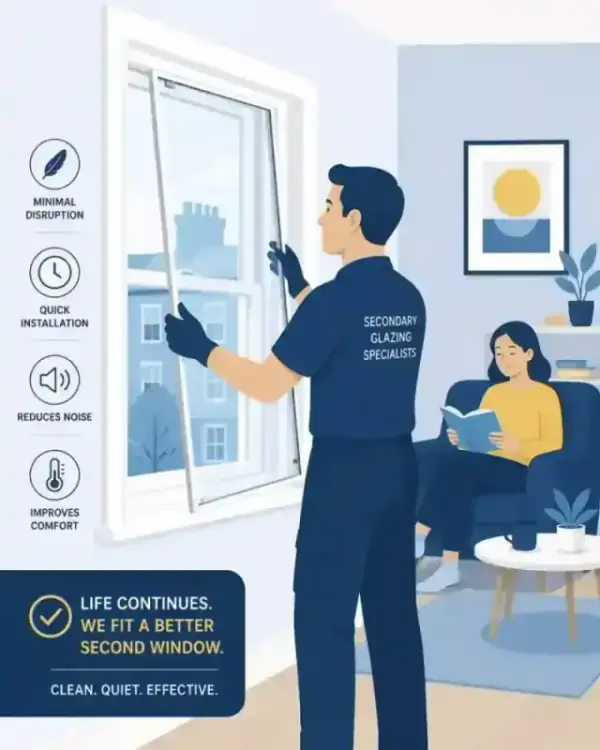
Secondary glazing can also help with outside noise when the inner frame, glass, seals and air gap are suited to the source. Configurations are sometimes described as offering up to 80% noise reduction, but that is an indicative estimate for particular test or project conditions—not a guarantee for every sash window, room or noise type. For the acoustic build-up, read the soundproof secondary-glazing guide.
Traffic frequency, glass mass, air-gap depth, perimeter seals, installation quality and flanking paths through the building all matter. Ask what was measured, with which glass and window, and where. A survey should set expectations for the actual room rather than turn a headline percentage into a promise.
Why sash windows and period homes change the decision
Victorian, Georgian and Edwardian homes often have original sash windows that contribute to the building’s character. Secondary glazing adds an internal layer, so it may preserve the external appearance while improving the room within. It still uses reveal space, adds another pane to clean and may require both layers to be opened for ventilation or maintenance. For opening-style context, including lift-out options, see the secondary-glazing options guide.
An internal installation is not a blanket planning or Listed Building Consent exemption. Local policy, fixings, shutters, significance and the proposed detail still matter. For a whole-property route that keeps original fabric in view, read the complete period-property energy-efficiency guide.
Case study: a property-specific 18% saving (£504)
The original example described a mid-terrace Victorian home in a Kensington conservation area. Bespoke slimline vertical sliders with 4mm Low-E glass were fitted across five main front-facing windows. The household reported an 18% first-year heating-bill saving (£504), alongside a significant reduction in traffic noise and a more usable living room near the windows.
This is a property-specific example, not a benchmark or guarantee. The reported result may have been influenced by the original sash windows, glass, seals, air gap, installation, starting bills, tariff, weather, heating controls and household behaviour. Read the Victorian-flat case study as an example of how one project was described, not as a forecast for another home.
Questions to ask before you commit
- What condition are the original windows in? Repair, draught proofing or safe operation may need attention first.
- What exactly is being specified? Ask for the glass, frame, seals, air gap, opening style and installation method in writing.
- What is included in the cost? Separate the glazing, repairs, survey, access, finishing, consent advice and aftercare.
- How was the saving or payback estimated? Ask for assumptions about bills, energy prices, heating behaviour and the number of windows.
- How will it work day to day? Check sightlines, handles, shutters, curtains, radiators, ventilation, cleaning and escape routes.
FAQs about secondary glazing and energy bills
Is secondary glazing worth it in 2026?
It may be worth considering when original windows are suitable for an internal layer and preserving the period character matters. The value comes from the balance of comfort, thermal performance, noise, disruption, cost and consent—not from one guaranteed bill figure.
Will secondary glazing reduce my heating bills?
It may reduce heat demand through suitable windows, but the effect on bills depends on the complete property, window specification, heating controls, energy prices, weather and household behaviour. Treat any percentage or pound saving as an indicative scenario.
What U-value can secondary glazing achieve?
Indicative figures in the table are about 2.4–2.7 for standard glass and about 1.7–1.9 for Low-E glass in defined constructions. The actual U-value depends on the glass, seals, air gap, frame and installation, and it does not predict your whole-home bill.
Is secondary glazing 40–60% cheaper than replacement?
Some project comparisons use that range, but it is not a universal saving. Ask for like-for-like quotations that include repairs, access, glass, installation, making good and any consent-related work.
Is an 8–12-year payback guaranteed?
No. It is an indicative planning range used for some targeted projects. Your payback depends on the installed cost, actual energy saving, energy prices, weather and heating behaviour.
Will it reduce outside noise by 80%?
Some configurations are quoted at up to 80% under particular conditions, but the result varies with glass, air gap, seals, installation, sound frequency, room and other routes through the building. Treat the figure as an estimate, not a promise.
Make the decision from your windows, not a headline
Secondary glazing can be a sensible 2026 option for a period home that needs better comfort while retaining original windows. The responsible next step is a measured survey that tests the window condition, glass, seals, air gap, ventilation, quotation and property-wide heating context.
At SecondaryDoubleGlazing, we specialise in these specific challenges. If you are looking to cut your heating bills without replacing your original windows, our team can provide a technical assessment of your property’s thermal weak points.
Ready to stop the "invisible leak"? Contact us today for a bespoke survey and quote.