
For twelve years, Sarah’s morning routine in her beautiful Westminster mansion flat followed a predictable, albeit frustrating, rhythm. It started at 5:30 AM with the low rumble of the first double-decker buses on the Red Route outside, followed by the percussive thud of delivery lorries hitting a nearby manhole cover. By the time her alarm actually went off, she had already been awake for an hour, cocooned in a heavy duvet to fight off the persistent chill creeping through her original Victorian sash windows.
Sarah loved her home: the high ceilings, the intricate cornicing, and that unmistakable sense of London history. But living on a major A-road meant her single-glazed windows were essentially acoustic sieves and thermal leaks.
"I’d tried everything," Sarah told us during our first visit. "Heavy velvet curtains, draft excluder snakes, even earplugs. But you can’t 'curtain' away the vibration of a bus or the biting cold of a January morning in a conservation area."
Her story is one we hear often across the city. Whether you are looking for soundproofing flats in Kensington or trying to make a period home in Westminster habitable again, the struggle is the same: how do you fix the noise and the cold without destroying the very heritage that made you fall in love with the building?
The Red Route Reality
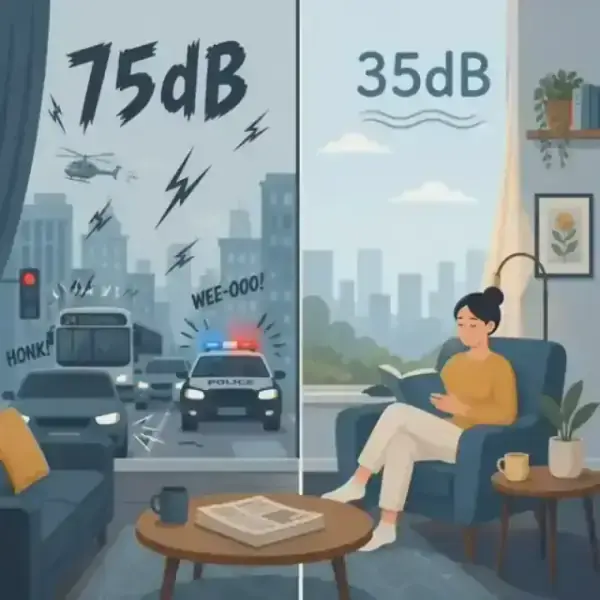
Living on a London Red Route: those busy thoroughfares managed by TfL where stopping is strictly prohibited: comes with a specific set of challenges. The noise isn't just a background hum; it’s a constant, high-decibel presence. In Sarah's flat, we measured the peak noise levels at roughly 75dB. To put that in perspective, that’s about the same as having a vacuum cleaner running constantly in your living room.
Then there’s the thermal issue. Victorian mansion flats were designed to breathe, which is a polite way of saying they are incredibly drafty. With original timber sashes, the gap between the glass and the frame is often wide enough to slide a credit card through. For Sarah, this meant her heating was permanently on full blast, yet she still felt a draft while sitting on her sofa.
Why Replacing the Windows Wasn't an Option
Many homeowners' first instinct is to look at full window replacement. However, in a Westminster conservation area, this is rarely straightforward.
- Planning Restrictions: Westminster City Council is notoriously protective of its streetscapes. Replacing original timber sashes with modern double-glazed units often requires complex planning permission, which is frequently refused if the new windows don't perfectly replicate the originals.
- The Cost Factor: Replacing every window in a large mansion flat with high-quality, heritage-approved double glazing can easily spiral into the tens of thousands of pounds.
- The Disruption: Full replacement is a major construction job involving scaffolding, dust, and significant redecoration.
This is where secondary glazing in London becomes the "secret weapon" for period property owners. It involves installing a slim, high-performance second window on the inside of your existing one. Because it doesn't change the external appearance of the building, it's almost always approved in conservation areas: and in Sarah's case, it didn't even require a formal planning application.
The 1.5-Day Transformation
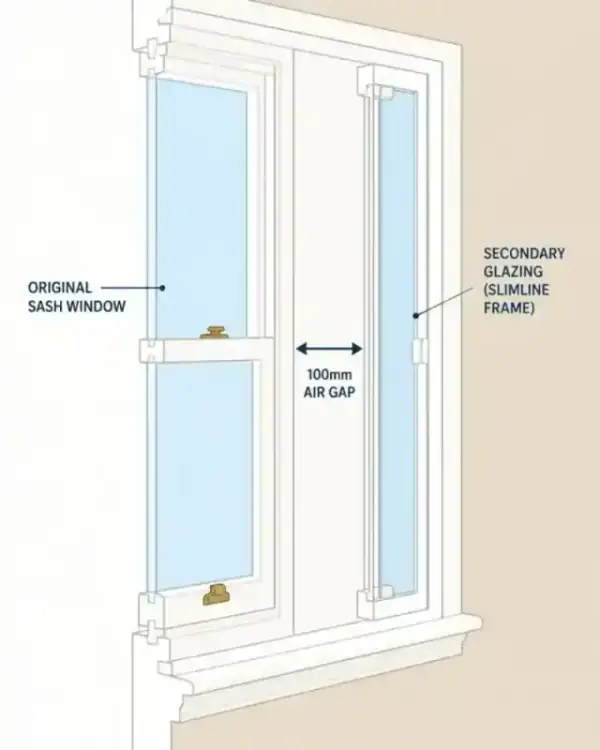
When Sarah reached out to us, she was skeptical. She’d heard that secondary glazing could look "clunky" or like an afterthought. We showed her our slimline frames, which are designed to align perfectly with the meeting rails of her existing sashes.
Our survey identified the need for a specific 100mm air gap between the original glass and our acoustic secondary glazing. This gap is the magic ingredient; it creates a "decoupled" barrier that stops sound vibrations in their tracks far more effectively than standard double glazing ever could.
The installation itself was a whirlwind of efficiency.
- Day 1: Our team arrived at 8:30 AM. We worked room by room, carefully fitting the bespoke units into the window reveals. There was no scaffolding and, crucially, no need to touch the original Victorian timber work.
- Day 2 (Half Day): We finished the final adjustments, sealed the units to ensure a perfect acoustic fit, and showed Sarah how to use the sliding panels for easy cleaning and ventilation.
By lunch on the second day, the job was done. No dust, no damage to her heritage cornicing, and most importantly, no need to repaint.

The Result: From 75dB to a Whisper
The transformation was immediate. As we closed the final secondary panel in the bedroom, the roar of the A-road outside simply… vanished.
"It was surreal," Sarah said. "I could see the buses moving past, but I couldn't hear them. It felt like the world had been put on mute."
The numbers backed up the feeling. We re-tested the noise levels:
- Before: ~75dB (Loud traffic/Vacuum cleaner level)
- After: ~35dB (A quiet library or a gentle whisper)
That 40dB drop isn't just a statistic; it’s a life-changing improvement in sleep quality and mental well-being. But the benefits didn't stop at the silence. Because the secondary units created an airtight seal, the drafts disappeared instantly. Sarah reported that within the first three months, her heating bills dropped by roughly 15%, as she no longer needed her radiators to work overtime to fight the Westminster winter.
A Neighborly Word of Advice
If you’re living in a similar situation: perhaps in a period home in Westminster or looking for how to achieve 80% noise reduction in your London flat: here are three things to keep in mind:
- Focus on the Gap: For noise reduction, the space between the windows is more important than the thickness of the glass. Aim for at least 100mm to really kill the low-frequency rumble of traffic.
- Match the Lines: Good secondary glazing for period homes in London should be invisible from the street and discreet from the inside. Ensure your installer matches the "sightlines" of your existing windows.
- Check Your Lease: While planning permission is rarely needed for internal work, if you live in a mansion block, it's always worth a quick check with your freeholder or managing agent. Usually, they are delighted you're improving the EPC rating of the building without changing its face.
Sarah finally got her first full night of sleep in twelve years. Her flat is now the sanctuary she always wanted it to be: warm, quiet, and perfectly preserved. If you're tired of the "Red Route rumble," secondary glazing might just be the most cost-effective, non-intrusive upgrade you'll ever make.
Ready to reclaim your peace and quiet? You can explore our range of secondary glazing windows here or get in touch for a friendly chat about your property.