
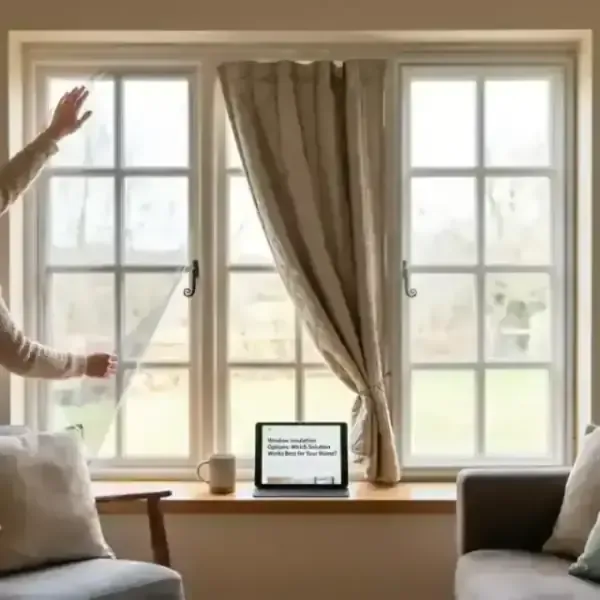
Window film and secondary glazing are both used to improve older windows, but they solve different problems. Film is a thin coating or removable sheet applied to the existing glass. Secondary glazing adds a separately framed internal pane with its own seals and opening method.
Film can be a low-cost, low-profile intervention for solar control, privacy or a modest change in comfort. It is not a like-for-like substitute for professionally surveyed secondary glazing, particularly where the main goals are draught control, traffic-noise reduction, heritage-sensitive detailing or a substantial thermal upgrade.
What window film does
Window films are available for solar control, privacy, safety, UV management and decorative use. The product, glass, orientation, installation and edge detail all affect the result. Some films are permanent adhesives; others are static-cling or seasonal products. Follow the manufacturer’s instructions and check compatibility with the existing glass.
Film remains on the original window. It does not create the independent air cavity that distinguishes secondary glazing, and it does not add a second opening layer. It can therefore be simpler and less visually intrusive, but it has a narrower role.
What secondary glazing does
Secondary glazing places a separately framed pane on the room side of the original window. The system may be fixed, hinged, sliding or lift-out. Its frame, seals, glass, air gap and opening style are selected around the actual reveal and the way the room is used.
The additional layer may reduce draughts and heat transfer through the opening and may reduce some external noise. It cannot guarantee a fixed U-value, dB result, bill saving or condensation outcome. The existing frame, installation, property and other sound or air paths still matter.
Heat-loss claims in context
Some film manufacturers and comparison articles cite 60–70% heat-loss reduction for a particular product or test arrangement. Treat this as an indicative, product- and test-dependent estimate, not a prediction for an older window or a whole home. Installation quality, edge sealing, glass type, solar exposure and the rest of the building can change the result.
Secondary glazing comparisons may cite around 70–80% reduction in heat loss or energy transfer for a suitable specification. That too is indicative and specification-dependent. A window-level test does not tell you what your heating bills will do. Ask whether the number refers to the glass, the window assembly or a modelled room, and what assumptions were used.
Acoustic performance
Film is generally not a primary acoustic solution. It may change the mass or damping of the glass slightly, but it does not create an independent frame and air cavity. Its effect on traffic, voices, aircraft or low-frequency vibration is therefore likely to be limited and product-specific.
Secondary glazing may be considered where noise through the window is a priority. Source comparisons sometimes describe 35–45 dB or 70–80% improvements for suitable systems. These are indicative, test- and property-dependent figures, not guarantees. Glass, seals, air gap, the original window, installation and flanking paths through walls, doors, vents and roofs all matter.
Read the acoustic-glass guide for the difference between a glass specification and a complete window result.
Film versus secondary glazing: a practical comparison
| Factor | Window film | Secondary glazing |
|---|---|---|
| Typical role | Solar control, privacy, UV or modest comfort change | Draught, thermal and acoustic improvement through an added window layer |
| Construction | Coating or thin sheet on the original glass | Independent internal pane, frame and seals |
| Indicative cost | Often lower; product, area and installation determine it | About £300–£800 standard; £600–£1,200 acoustic; all indicative |
| Noise performance | Limited and product-dependent; no independent cavity | May provide greater reduction with suitable glass, seals and air gap |
| Heat-loss claims | 60–70% figures are indicative and test-dependent | 70–80% figures are indicative and specification-dependent |
| Original window access | Usually unchanged, but film can complicate cleaning or removal | Depends on fixed, hinged, sliding or lift-out design |
| Reversibility | Static-cling products may be removable; adhesive films vary | May be removable, but fixings and heritage fabric need checking |
| Heritage and consent | Case-specific; product and application still matter | Case-specific; fixings, reveals, listed status and local rules matter |
Cost and value
Film may cost less because there is no second frame, specialist cavity or moving hardware. The price can still vary with the glass area, access, product, preparation, installation and whether the film is professionally applied. A low headline price may not include removal, edge finishing or replacement if the product fails.
Secondary glazing is a larger intervention and has a wider indicative range: around £300–£800 per standard window, £600–£1,200 for acoustic work, and more for heritage, curved, arched or complex openings. These are planning ranges, not quotes. See the UK cost guide for the questions that make quotes comparable.
Value is not only payback. Film may be a sensible limited intervention where solar gain or privacy is the priority. Secondary glazing may be more suitable where an owner wants to retain the original window while addressing draughts, cold glass and outside noise. Neither option guarantees a particular return or property-value change.
Older sash windows and period properties
Film can be applied to original sash glass, but check whether the product is compatible with historic or delicate glass and whether removal could disturb putty or paint. Do not use heat, blades or solvents unless the product instructions specifically allow them and the surface can safely tolerate them.
Secondary glazing can preserve the original sash in place while adding a separate pane. A vertical slider may follow the existing proportions, while hinged, lift-out or fixed units may suit different access needs. The primary frame should still be inspected for rot, loose putty, failed cords, water ingress and air leakage. Read the sash-window guide before choosing.
Listed buildings and conservation areas
Film does not automatically avoid consent questions. A visible tint or reflective finish can change the appearance of an elevation, and listed-building or lease requirements may still apply. Secondary glazing is often considered because it can be internal and potentially reversible, but that does not create a blanket exemption.
Check the property’s listing, conservation-area appraisal, Article 4 Directions, lease and landlord requirements. Ask the relevant planning or conservation authority about the actual proposal before work begins. The listed-building guide and conservation guide explain the decision points, but neither can determine consent for your address.
Which is better for older windows?
Choose film when your main goal is a compatible, low-profile change such as solar control, privacy or UV management, and you understand the product’s limits. Check the glass, orientation, warranty and removal method before purchase.
Investigate secondary glazing when draughts, cold internal glass, traffic noise or heritage-sensitive retention are the main concerns. A specialist survey can compare the original frame’s condition, air gap, glass, seals, opening style, ventilation and the room’s use.
Do not choose on a single percentage. Ask what was measured, in which build-up, under which conditions and whether the number applies to the glass, the complete window or the room.
Questions to ask before buying
- Is the film or panel compatible with my existing glass and frame?
- Will the product change the appearance from inside or outside?
- How can it be cleaned, repaired and removed without harming original finishes?
- What evidence supports any heat-loss, acoustic or UV claim?
- Does the quotation include preparation, installation, VAT, access and making good?
- Will the chosen option affect ventilation, shutters, curtains, handles or escape access?
- Do planning, listed-building, conservation, landlord or freeholder requirements apply?
FAQs
Is window film as good as secondary glazing?
No like-for-like comparison should be assumed. Film sits on the original glass and secondary glazing adds a separate framed pane with seals and an air gap. Film may suit solar or privacy needs; secondary glazing may be more suitable for draughts, noise and heritage-sensitive window retention.
Can window film reduce heat loss by 60–70%?
Some products or articles cite that range for a particular test or specification. Treat it as indicative, not a guaranteed result for an older window or whole property. Ask for the test basis and installation assumptions.
Can secondary glazing reduce heat loss by 70–80%?
That range is sometimes used as an indicative comparison for a suitable specification. It is not a guarantee. Glass, seals, air gap, frame, installation, original-window condition, ventilation and the whole building affect the result.
Which is better for outside noise?
Secondary glazing generally offers the more relevant route because it can create an independent sealed layer and use acoustic glass. Any 35–45 dB or 70–80% figure is indicative and test- or property-dependent; film is not a guaranteed acoustic solution either.
Is secondary glazing cheaper than window film?
Film is often the lower-cost intervention, but both prices depend on area, preparation, installation and access. Compare the outcome you need, not only the purchase price. Secondary-glazing costs are typically higher because they include a frame, pane, seals and fitting.
Can either option be used on a listed building?
Possibly, but consent is case-specific. Film’s appearance and removal method and secondary glazing’s fixings and effect on historic fabric should be checked with the relevant authority. Do not rely on “removable” or “internal” as a universal exemption.
Make the comparison property-specific
Window film can be a useful targeted product, while secondary glazing is a more substantial window-system upgrade. For older windows, the best answer depends on whether you are solving solar gain, privacy, draughts, cold glass, outside noise, condensation risk or a combination of problems.
Contact SecondaryDoubleGlazing for a measured discussion of your original windows, or explore the secondary-glazing services before committing to a product.