
If you live in a Grade II listed property in London, you know the specific "heritage paradox": you absolutely love the history, the original timber sashes, and the character of your home: but you’re likely tired of wearing three jumpers indoors during February.
Living with single-glazed windows in a busy city means dealing with more than just a bit of a draught. It’s the constant hum of the red buses, the screech of the Tube from three streets away, and a heating bill that looks more like a mortgage payment. But when you look into double glazing, you’re met with a wall of red tape and "No" from the conservation officer.
This is exactly why secondary glazing for listed buildings has become the gold standard. It provides a way to get modern-day comfort: slashing noise by 80% and keeping the heat in: without touching the "historic fabric" that makes your home special. In short, it’s the only solution that lets you keep your heritage and your sanity.
Why Historic England Actually Prefers This
Most homeowners assume that any change to a listed building will be a battle. However, secondary glazing is one of the few upgrades that Historic England and local conservation officers actually recommend.
The magic word they look for is reversibility.
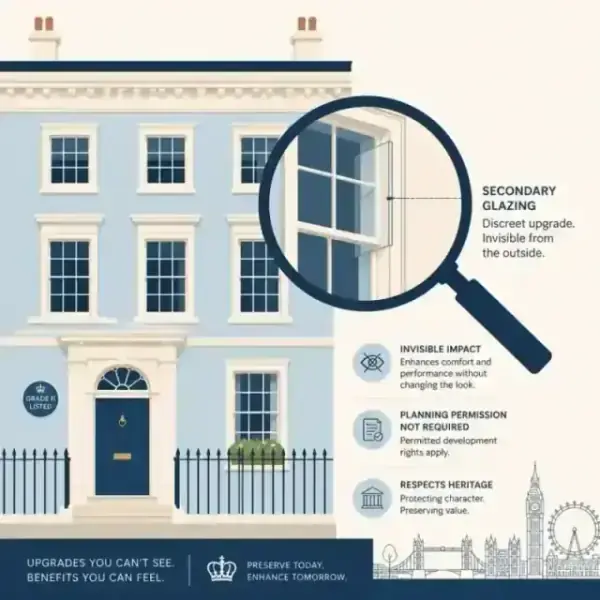
Because secondary glazing is installed as a separate unit on the internal side of your window reveal, it doesn't change the exterior look of the building. More importantly, it can be removed in the future without damaging the original 18th or 19th-century timber. It’s a "non-invasive" procedure for your house.
When you choose secondary glazing for heritage windows, you aren't replacing history; you’re protecting it. By adding that extra layer of glass, you’re also reducing the condensation that often rots original sashes, effectively extending the life of the windows you’re required by law to preserve.
Navigating the Planning Permission Trap
One of the most common questions we get is: "Do I need planning permission for secondary glazing?"
In most cases in London, the answer is a refreshing no. Because secondary glazing is an internal alteration and doesn't change the external "façade" or appearance of the street, it usually falls outside the scope of standard planning permission.
However, since your home is Grade II listed, you technically have to consider Listed Building Consent (LBC). The good news? London authorities are becoming much more pragmatic. For example, the Royal Borough of Kensington & Chelsea has issued a "Listed Building Consent Order" which essentially gives pre-approval for secondary glazing in Grade II buildings, provided it’s designed sensitively.
To stay on the right side of the rules, your installation should be:
- Discrete: The frames should be slim and aligned with the existing sash meeting rails.
- Internal: Nothing should be visible from the street.
- Low Impact: It should be screwed into the window reveal, not the original window frame itself.
If you’re unsure, we always recommend a quick chat with your local conservation officer, but you’ll find they are much more welcoming to this than they would be to a skip full of your original windows. You can read more about these nuances in our Ultimate Guide to Secondary Glazing for Listed Buildings.
The Performance: U-Values and Decibels Explained
Let’s talk about the real-world impact. We often hear from clients who think they need "double glazing" to be warm, but that isn't necessarily true.
Thermal Standards
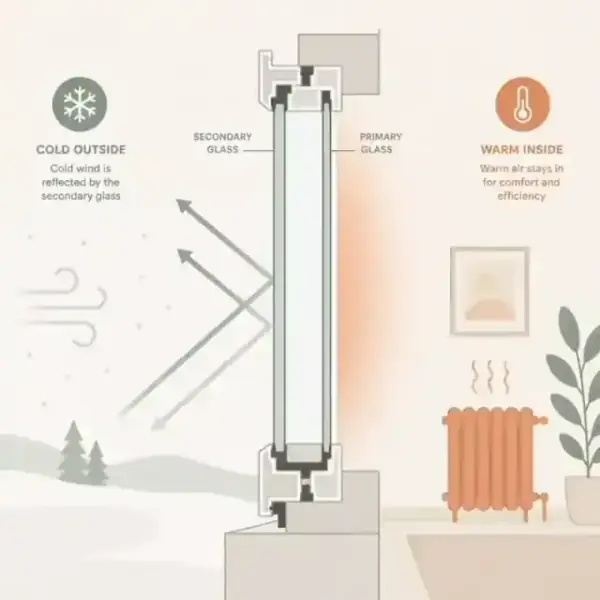
Thermal efficiency is measured by a U-value: the lower the number, the better the window is at keeping heat in. A standard single-pane window has a dismal U-value of around 5.0. By adding secondary glazing with Low-E glass, you can bring that down to roughly 1.8 to 2.5. For context, that’s comparable to (and sometimes better than) many standard double-glazed units. You can expect to see around a 15% reduction in your annual heating bills almost immediately.
Acoustic Sanctuary
If you’re living on a busy London thoroughfare, the "acoustic" benefit is usually the real winner. Standard double glazing uses two panes of glass very close together. This is okay for heat, but sound can actually "bridge" that small gap easily. Secondary glazing creates a much larger air gap (usually 100mm to 150mm) between the original window and the new one. This "decoupled" system is far superior for soundproofing, often cutting street noise by 70-80%. It’s the difference between hearing every word of a late-night conversation on the pavement and absolute silence.
Perfecting the Look: Sash Window Secondary Glazing
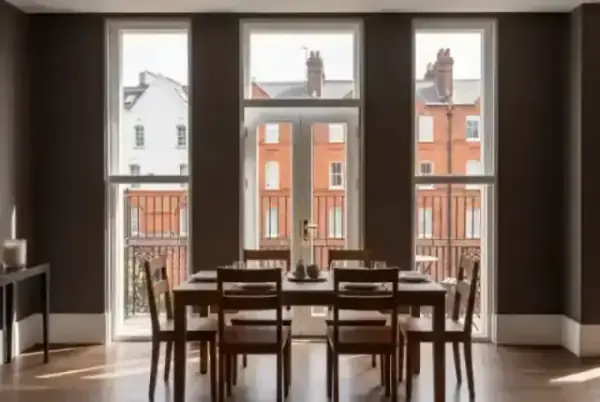
The biggest worry for owners of Georgian or Victorian homes is that a modern frame will ruin the room’s aesthetic. We completely understand: if you have beautiful shutters or ornate architraves, you don’t want a clunky aluminium box sitting in front of them.
This is where sash window secondary glazing comes in. Modern units are incredibly slimline. We design them so that the horizontal "meeting rail" of the secondary unit sits exactly behind the meeting rail of your original sash. From a few feet away, it’s practically invisible.
We offer several ways to access your original windows for cleaning or ventilation:
- Vertical Sliders: These mimic the movement of your original sash windows, sliding up and down effortlessly.
- Hinged Units: These open inward like a door, perfect for arched windows or where you need full access to the exterior sill.
- Lift-Out Panels: Ideal for windows you rarely open but want to keep insulated.
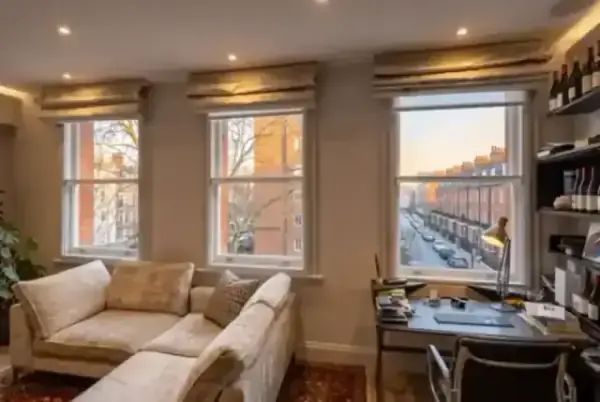
The goal is a seamless look. As you can see in our guide to London homes, the best installation is the one your guests don't even notice until you point it out.
Practicality Meets Price
We have to be honest: the cost is a major factor. Replacing original windows in a Grade II listed building: if you can even get permission: is eye-wateringly expensive. You’re looking at bespoke timber joinery, specialist heritage glass, and weeks of disruption.
Grade II listed building secondary glazing is typically 40-60% cheaper than a full replacement.
Beyond the initial price tag, the installation is remarkably clean. Because we aren't ripping out your existing window frames, there is no "making good" to do. No plastering, no repainting the entire room, and no scaffolding. Most London homes can be fully upgraded in just 1 or 2 days. It’s a "surgical" upgrade rather than a "demolition" project.
Your Next Steps
If you’re tired of the draughts and the noise, don’t assume your heritage status means you’re stuck with 19th-century insulation.
The first step is always a professional survey. We don't just look at the size of the window; we look at the depth of the reveal, the condition of the timber, and the specific noise frequencies you’re trying to block. Whether you’re near a busy train line or just want to stop the curtains fluttering in the wind, there is a bespoke configuration that works.
Secondary glazing isn't a compromise: it’s the go-to choice for Londoners who want to live in a piece of history while enjoying the comfort of the present.
Ready to transform your home? Reach out to us for a chat about your property. We’ve spent years working with London’s unique architectural heritage, and we’d love to help you make your listed home the peaceful, warm sanctuary it’s supposed to be.