
If you’ve ever tried to sleep through the 5:30 AM rumble of the number 38 bus or the persistent hum of a London "red route," you know that "quiet" can feel like a luxury in this city. You might have tried heavy curtains, earplugs, or even moving your bed to the other side of the room, only to find the noise still finds its way in.
The truth is, most London homes, especially our beautiful Victorian and Georgian properties, weren’t built with modern traffic in mind. Their single-pane windows are essentially holes in your wall as far as sound is concerned.
So, can you actually soundproof your windows? Yes, you absolutely can, and the most effective way to do it without losing your original windows is through secondary glazing. By adding a specialized second layer of glass with a specific air gap and acoustic glass, you can reduce incoming noise by 70-80%.
In this guide, we’re going to look at the actual science of how this works, why certain "solutions" fail, and exactly what you need to look for to finally get some peace and quiet.
The Science of Silence: Why Your Windows Are Failing
To understand how to block noise, we have to understand what noise actually is. Sound is a vibration traveling through the air. When those vibrations hit a thin sheet of glass, the glass vibrates too, passing the sound right into your living room.
The Decibel Dilemma
In the world of soundproofing, we talk a lot about decibels (dB). But here’s the tricky part: the decibel scale is logarithmic. This means a small change in numbers equals a huge change in what you actually hear.
- A 3dB reduction is the smallest change the human ear can typically notice.
- A 10dB reduction sounds like the noise has been halved.
- A 20dB reduction makes the noise sound about one-quarter as loud as before.
When we install soundproof windows in London, we’re aiming for that 20dB+ sweet spot. If your current single-pane windows are letting in 70dB of traffic noise (about the level of a vacuum cleaner), a high-quality secondary glazing system can bring that down to a much more manageable 45-50dB (the level of a quiet conversation or a library).
Why Standard Double Glazing Often Isn't Enough
Many homeowners think the answer is simply replacing old windows with standard double glazing. While double glazing is great for heat, it’s surprisingly mediocre for sound.
The two panes in a standard double-glazed unit are usually very close together: often just 16mm to 20mm apart. This small gap can actually create a "drum" effect where sound resonates between the panes, sometimes making certain frequencies even more noticeable. To truly block noise, you need two things: Mass and Space.
The Secret Ingredient: Acoustic Glass Secondary Glazing
If you’re serious about noise reduction, "standard" glass won’t cut it. You need acoustic glass.
Acoustic glass isn't just thicker glass; it's a sandwich. It’s made of two layers of glass bonded together with a special acoustic interlayer (usually a polymer called PVB, or Polyvinyl Butyral).
This interlayer acts like a dampener. When sound waves hit the glass, the interlayer absorbs the energy and prevents the glass from vibrating. Think of it like putting your hand on a ringing bell to stop the sound.
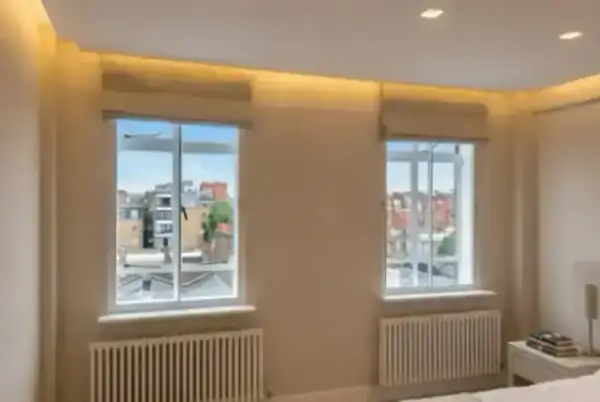
When you combine acoustic glass secondary glazing with your existing windows, you create a powerhouse of noise defense. You have the original glass, a massive air gap, and then the high-tech acoustic layer. This "mass-air-mass" system is the gold standard for soundproofing.
The 100mm Rule: Why the Gap Matters
If the acoustic glass is the "mass," the air gap is the "spring." For effective noise reduction windows, the distance between your original window and the secondary unit is critical.
In London, where space is at a premium, we often try to keep things slim. However, for soundproofing, bigger is almost always better.
- The sweet spot is usually between 100mm and 150mm.
- This gap is large enough to decouple the two windows, meaning the vibrations from the outside window don't have enough energy to jump across the air and shake the inside window.
If you only have a 20mm gap, you’ll get some thermal benefits, but the sound reduction will be disappointing. At 100mm+, you start to see that 70-80% drop in noise that makes a London flat feel like a countryside retreat.
Tackling the "Red Routes": Low-Frequency Noise
London’s Red Routes (major arterial roads like the A1, A4, or A40) present a specific challenge. Unlike the high-pitched chirp of a bird, traffic noise is often "low-frequency." This is that deep, vibrating rumble you feel in your chest when a heavy lorry passes by.
Low-frequency noise is much harder to stop because the long wavelengths can literally travel through solid walls. Standard window ratings (like STC) often focus on mid-to-high frequencies (like speech). For Red Routes, we look at OITC (Outdoor-Indoor Transmission Class), which specifically measures how well a window blocks low-frequency sounds.
By using secondary glazing for your London home, we can use glass of different thicknesses (e.g., 6.4mm acoustic glass paired with your original 3mm glass). This "asymmetric" approach prevents "coincidence resonance," where sound at a specific frequency passes through both panes easily. It’s a bit like having two different filters that catch different sizes of debris.
Beyond Sound: The "Bonus" Benefits
While you might be looking for soundproofing, secondary glazing is one of those rare home improvements that solves multiple problems at once.
- Thermal Insulation: That 100mm air gap isn't just good for sound; it’s an incredible insulator. You’ll notice your heating stays in and your bills go down.
- Preserving Heritage: If you live in a listed building or conservation area, you often can't replace your original sash windows. Secondary glazing is usually permitted because it’s a "reversible" internal change.
- Condensation Control: By sealing off the warm, moist air of your room from the cold outer glass, you can significantly reduce the damp and condensation issues common in older London homes.
- Security: An extra layer of toughened or laminated glass is a massive deterrent to anyone trying to get in.
How to Succeed with Your Project
If you’re ready to reclaim your peace of mind, here is a quick checklist for your soundproofing project:
- Measure the Depth: Check if your window reveals have enough depth for a 100mm gap. Don't worry if they don't; we can often build out the frame slightly to accommodate it.
- Specify Acoustic Glass: Don't just ask for "thick glass." Ensure you are getting laminated acoustic glass with a PVB interlayer.
- Think About Access: You’ll still need to clean your windows and open them for fresh air. Choose a style (horizontal sliding, hinged, or lift-out) that matches how your existing windows open.
- Professional Survey: Soundproofing is only as good as the seal. A tiny gap or a poorly fitted frame will leak sound like a sieve. A professional survey ensures the unit is airtight.
Ready to Turn Down the Volume?
Living in London shouldn't mean sacrificing a good night's sleep. Whether you're right on a busy high street or just tired of the neighbor's early morning car engine, soundproof windows in London are a game-changer.
Most of our installations take just a day or two and require no messy construction or planning permission. You keep your beautiful original windows, but you lose the noise.
If you're ready to see how much of a difference it could make in your home, get in touch with us for a chat. We’ll help you figure out the best glass and gap combination for your specific street, so you can finally enjoy the quiet you deserve.