

If you’re living in a period flat in Kensington or a Victorian terrace in Chelsea, you already know the trade-off. You get the high ceilings, the original cornicing, and that unmistakable London character, but you also get the drafty windows and the constant "hum" of the city. Whether it’s the early morning bin collection or the steady thrum of traffic on the Cromwell Road, noise finds a way in.
The direct answer to making these homes livable without losing their soul is secondary glazing. It’s not about replacing your historic windows; it’s about adding a discreet, high-performance internal layer that stays invisible from the street but changes everything the moment you close it.
The Conservation Catch-22 in London’s Most Iconic Boroughs
London is a city defined by its heritage. In areas like Westminster, Kensington, and Chelsea, conservation rules are understandably strict. If you have original sash windows, the council (and likely your freeholder) will almost certainly block you from replacing them with modern double glazing. Even if you could, ripping out 150-year-old timber often feels like a crime against the building’s history.
This is where secondary glazing becomes the hero of the story. Because it is installed on the inside of your existing windows, it doesn't change the external appearance of the building. This means it usually doesn't require planning permission, even for Grade II listed properties. It’s a reversible, non-intrusive way to bring a 19th-century home into the 21st century without a single phone call to the planning office.
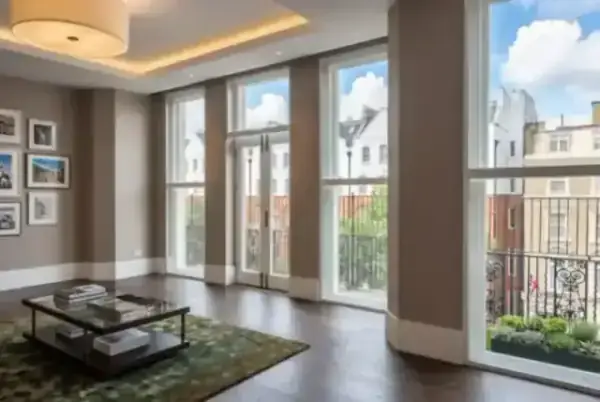
Why Secondary Glazing Beats Double Glazing for Noise
It sounds counter-intuitive, but secondary glazing is actually better at soundproofing than standard double glazing.
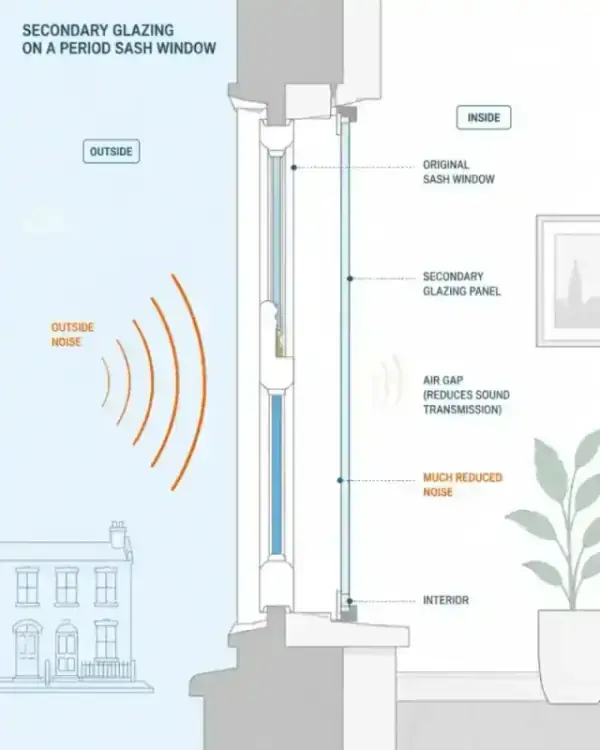
When you replace a window with a double-glazed unit, the two panes of glass are very close together, usually only 16mm to 20mm apart. This small gap is great for heat, but it’s too narrow to stop low-frequency sounds like traffic or sirens.
Secondary glazing allows for a much larger air gap, typically between 100mm and 150mm. This gap acts as a "buffer zone" that traps sound waves before they can reach your living room. When we combine this gap with acoustic laminated glass, we can achieve a 70-80% reduction in noise.
In real-world terms, that means if you live near a busy bus route in Chelsea, the roar of the engines is reduced to a distant, muffled murmur. It’s the difference between hearing a conversation on the street and enjoying a quiet evening with a book.
Keeping the Cold Out (and the Heat In)
While most people come to us for the quiet, they stay for the warmth. Period windows are notorious for "rattle and draft." No matter how many times you paint them, the gaps in old sash windows let heat escape like an open door.
By installing a thermal secondary glazing layer, you’re effectively creating a seal that stops those drafts in their tracks. We’ve seen clients reduce their heat loss by up to 60%, which isn't just about being cozy, it’s about seeing a noticeable drop in those London energy bills.
A common concern we hear in places like Westminster is condensation. By sealing the internal environment and using the right glass, secondary glazing can actually help manage the temperature difference that causes damp and mold on your original frames.
Tailoring the Solution: Sash, Bay, and Bespoke
Every London flat has its quirks. You might have a massive bay window in a Fulham terrace or slim, tall French windows in a South Kensington mansion block. The beauty of secondary glazing is its flexibility.
- Vertical Sliders: These are perfect for sash windows. They align perfectly with your existing rails, so you can still open both windows for ventilation.
- Hinged Units: These open like a door, making them ideal for casement windows or where you need full access to the original glass for cleaning. Hinged secondary glazing is often the slimmest and most discreet option.
- Horizontal Sliders: Great for wider windows or those where space is tight.
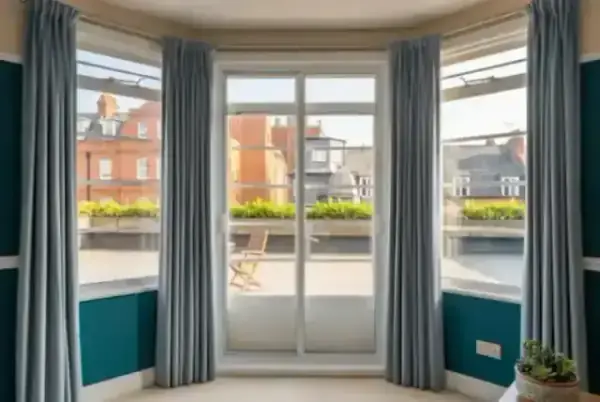
We recently worked on a property near Sloane Square where the owner was convinced they’d have to live with the noise because of their curved bay windows. We were able to install a bespoke curved secondary unit that followed the exact lines of the original timber. From the sidewalk, you couldn’t tell anything had changed, but inside, the silence was immediate.
The Reality of Installation: Quick, Clean, and Cost-Effective
One of the biggest hurdles to home improvement in London is the disruption. The last thing you want is a week of scaffolding, dust, and open window frames in the middle of winter.
Secondary glazing is significantly cheaper, usually about 40-60% less than a full high-end window replacement. But more importantly, the installation is remarkably clean. Most of our London installs take just 1 to 2 days. There’s no structural work, no need to re-plaster, and definitely no scaffolding. Our team works from the inside, fits the frames, seals the edges, and we’re gone before your afternoon tea.
Is Secondary Glazing Right for Your London Home?
If you are currently frustrated by:
- Persistent street noise or flight paths.
- Drafts that make your living room feel like a fridge in January.
- High energy bills despite your best efforts.
- Strict rules from your council or freeholder.
Then the answer is likely yes. It’s the most practical way to bridge the gap between "historic charm" and "modern comfort."
Don’t feel like you have to guess the measurements or the best glass type yourself. The first step is always a professional survey. We can look at your specific window frames, measure the decibel levels, and show you exactly how the frames will look against your existing decor.
If you're ready to stop the noise and start enjoying your home the way it was meant to be, get in touch with us today for a chat about your property. We’ve spent years helping Londoners reclaim their peace and quiet: one sash window at a time.
- * *
WhatsApp us