
If you live along one of London’s notorious "red routes": think the A1, the South Circular, or the bustling stretches of the A40: you know that the city doesn’t just sleep; it rumbles. Between the low-frequency thrum of double-decker buses and the high-pitched hiss of tyres on wet tarmac, your home can often feel like it’s right in the middle of the carriageway.
The short answer to reclaiming your peace is simple: Secondary glazing with acoustic glass can reduce incoming traffic noise by up to 80% (roughly 40-45 decibels).
But how does it actually work? It’s not just about putting another piece of glass in the way. It’s a calculated dance of physics involving mass, air gaps, and vibration dampening. Here is the science behind how we turn a red route roar into a library-quiet whisper.
The Decibel Scale: Why "Halving" the Sound Isn't Enough
To understand soundproofing, we first have to look at how we measure noise. Sound is measured in decibels (dB), but here’s the catch: the scale is logarithmic, not linear.
A typical London red route during peak hours hits between 70 and 75 dB at your window. To get a good night's sleep, you really want that level to drop to around 30-35 dB inside your bedroom.
Now, you might think "I just need to reduce it by half." But in the world of acoustics, a 10 dB reduction is perceived by the human ear as a 50% reduction in volume. To get from a 70 dB "roar" to a 30 dB "whisper," you need a massive reduction that standard windows simply cannot provide. Standard single-pane windows usually only block about 25 dB, leaving you with a noisy 45-50 dB interior.
The Air Gap: The Invisible Hero of Soundproofing
If you take one thing away from this guide, let it be this: The air gap is the most important factor in blocking traffic noise.
Most modern double glazing has a small gap (usually 16mm to 20mm) between the two panes of glass. This is fantastic for keeping heat in, but it’s actually quite poor for sound. This small gap creates a "trampoline effect" where sound waves hit the first pane, vibrate the air in the middle, and pass that vibration directly to the second pane.
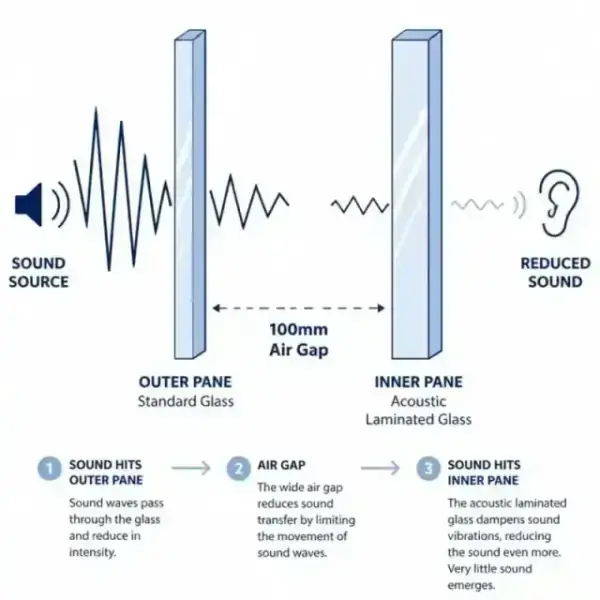
Secondary glazing works differently. Because we install an independent internal unit, we can create a much larger air gap: typically 100mm to 200mm.
This wide cavity acts as a "buffer zone." By the time the heavy, low-frequency sound of a bus engine travels through the first window and across a 150mm gap, it has lost a significant amount of energy. It simply doesn't have the "punch" left to vibrate the inner secondary pane. This is why secondary glazing for noise reduction is consistently more effective than even the most expensive new double-glazed windows.
Acoustic Glass: More Than Just Thick Panes
While the air gap does the heavy lifting, the glass itself plays a vital role. If you use two identical panes of glass, they will vibrate at the same frequency: a phenomenon called "resonance." This can actually allow certain sounds to "leak" through more easily.
To combat this, we use Acoustic Laminated Glass.

Acoustic glass isn't just thicker; it’s a sandwich. It consists of two layers of glass bonded together with a special PVB (Polyvinyl Butyral) interlayer. This interlayer acts like a dampener: think of it as a shock absorber for sound waves. When a sound wave hits the glass, the interlayer absorbs the vibration rather than passing it through.
By pairing your original window glass with a different thickness of acoustic secondary glass, you "confuse" the sound waves, ensuring that no single frequency can easily penetrate your home.
Why Secondary Glazing Beats New Double Glazing for Traffic
We are often asked: "Why shouldn't I just replace my windows entirely?"
For homeowners on red routes or in conservation areas, there are three main reasons:
- Physics: As mentioned, you can’t get a 150mm air gap inside a standard double-glazed unit. It’s physically too thick for most window frames.
- Heritage: Many London homes have beautiful, original sash windows. Replacing these with uPVC often ruins the property's character and can even decrease its value. Our discreet installations preserve the look from the outside while giving you 21st-century silence inside.
- Cost: Secondary glazing is typically 40-60% cheaper than a full window replacement. You get better sound performance for a fraction of the price.
A Quick "Red Route" Success Story
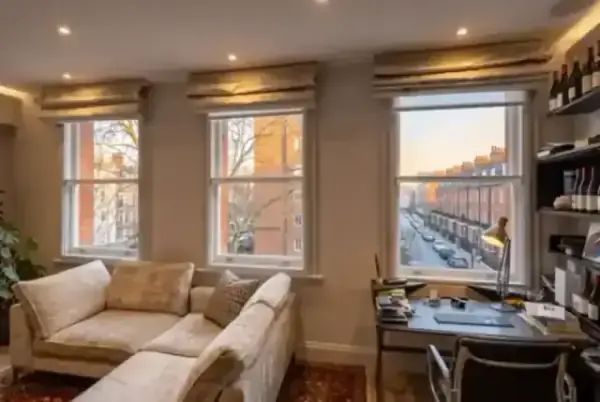
We recently worked with a homeowner near the A3 in Clapham. Their bedroom window faced the main road, and the constant "shhhhh" of tyres was making it impossible for them to sleep past 6:00 AM.
The original windows were single-glazed timber sashes. We installed a horizontally sliding secondary glazing unit with 6.4mm acoustic laminated glass and a 150mm air gap. The result? The ambient noise level dropped from a stressful 72 dB to a serene 32 dB. They told us it was the first time in three years they didn’t hear the morning bus route start up.
Actionable Steps for a Quieter London Home
If you're ready to tame the red route noise outside your door, here is how to approach it:
- Check your seals: Before upgrading glass, ensure your original windows aren't leaking air. If air can get in, sound can get in.
- Measure your depth: See how much space you have on your window sill (the "reveal"). To get the best acoustic results, you want to aim for at least a 100mm gap between the old and new glass.
- Specify Acoustic Laminate: Don't settle for standard "thick glass." Ask specifically for acoustic laminated glass to handle those sharp city noises like sirens and horns.
- Consider the opening style: Whether you need hinged units for easy cleaning or lift-out units for occasional access, make sure the style matches how you use your room.
Ready to silence the city?
Living on a busy road shouldn't mean sacrificing your peace of mind. Our team specializes in helping Londoners reclaim their homes from traffic noise with bespoke, expert installations.
Get a free quote today and discover how quiet your home can truly be.