
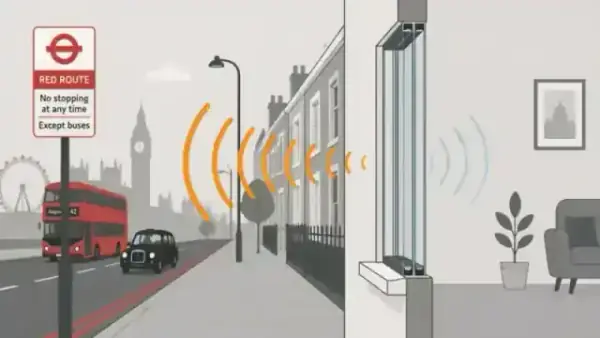
If you live along one of London’s notorious Red Routes: think the A10, the A23, or the South Circular: you know that “quiet” is a relative term. The low-frequency rumble of a double-decker bus, the high-pitched hiss of air brakes, and the constant hum of commuters aren't just background noise; they are part of the architecture of your life.
Many homeowners believe the only way to find peace is to move to the Cotswolds or replace their beautiful original windows with bulky, plastic-looking double glazing. But there is a more elegant, scientifically proven solution. By understanding the physics of sound and applying the right combination of acoustic glass and secondary glazing, you can reclaim your home from the city’s roar.
In this guide, I’ll break down the science of why your current windows are letting you down and how a few clever technical tweaks can reduce that traffic noise by up to 80%.
The Decibel Scale: Why a "Small" Number is a Big Deal
To fix a noise problem, we first have to measure it. Sound is measured in decibels (dB), but unlike measuring a piece of wood with a ruler, decibels are logarithmic.
In simple terms: every 10dB reduction in sound level is perceived by the human ear as a 50% reduction in loudness.
If your street-facing room sits at a noisy 65dB (about the level of a loud conversation or busy office) and we can bring that down by 20dB through proper noise reduction windows, the room won't just be "a bit quieter": it will sound four times quieter.
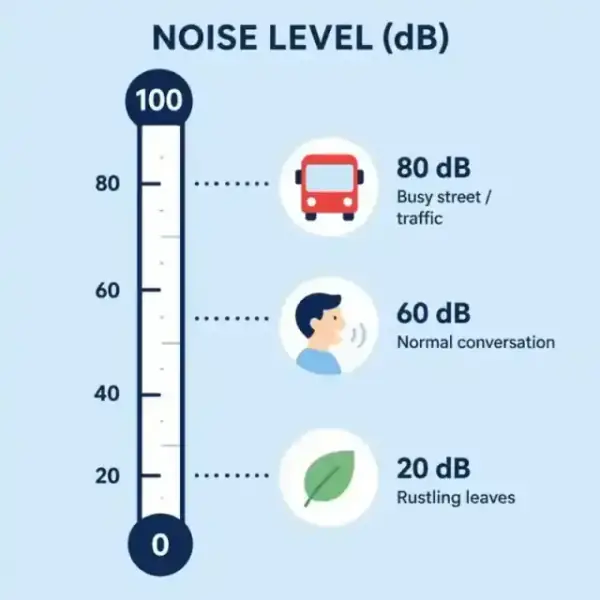
Typical single-pane sash windows common in London properties provide about 20-25dB of insulation. On a Red Route where the exterior noise hits 75dB, that leaves you with 50dB indoors, well above the 30-35dB recommended for a restful night’s sleep. Our goal with secondary glazing is to push that insulation rating (known as the Rw value) into the 40dB+ range.
Why Red Routes are an Acoustic Nightmare
Not all noise is created equal. Traffic noise, particularly on London’s major arteries, is a "broadband" problem:
- High-Frequency Noise: Screeching tyres and sirens. These are easier to block because the waves are short and can be stopped by most solid barriers.
- Low-Frequency Noise: The deep, vibrating thrum of a bus engine or a heavy truck. These waves are long and powerful; they don't just travel through the air, they physically vibrate your window glass.
This is why standard double glazing often fails on Red Routes. The two panes of glass are usually too close together, causing them to vibrate in sympathy with each other, effectively "carrying" the low-frequency noise right into your living room. To stop a bus rumble, you need more than just a second pane of glass; you need decoupling.
The Magic of the 100mm Air Gap
If there is one "secret ingredient" to soundproof windows in London, it’s the air gap.
When we install secondary glazing, we aren't just adding glass; we are creating an acoustic "buffer zone." The physics here is based on the Mass-Air-Mass principle. Your original window is the first mass, the new secondary pane is the second mass, and the air trapped between them acts as a spring.
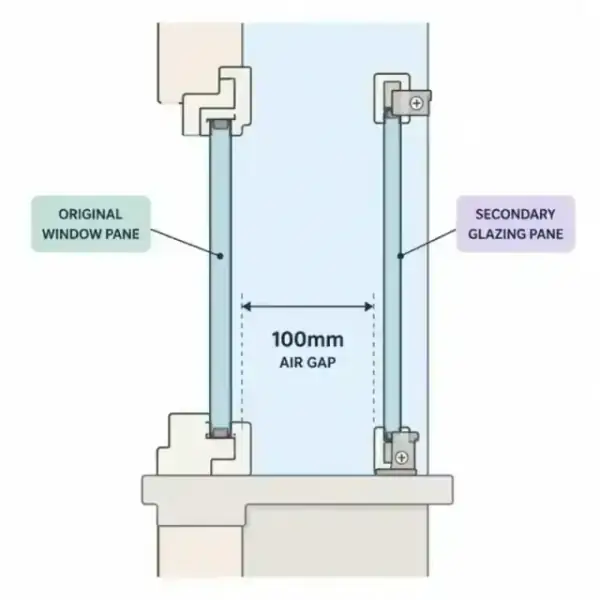
If that "spring" is too tight (a narrow 10-20mm gap), the vibration transfers easily. But once you hit a gap of 100mm to 150mm, the air becomes a highly effective dampener. It breaks the physical connection between the outside world and your home. For Red Route residents, this 100mm gap is non-negotiable if you want to silence the low-frequency engine rumbles.
Acoustic Glass: The Silent Hero
While the air gap does the heavy lifting for low frequencies, the glass itself handles the rest. Standard glass is rigid. When a sound wave hits it, the glass vibrates.
Acoustic glass (also known as laminated glass) is different. It’s made of two layers of glass sandwiched around a thin, transparent layer of Polyvinyl Butyral (PVB). This PVB interlayer acts like a silencer. When sound energy hits the glass, the interlayer absorbs the vibration and converts it into a tiny amount of heat energy instead of passing it through as noise.
Using acoustic glass in secondary glazing offers a two-pronged attack:
- Mass Law: Thicker, heavier glass naturally blocks more sound.
- Damping: The PVB layer stops the "ringing" or vibration of the pane.
When we combine different thicknesses: say, a 4mm original pane and a 6.4mm acoustic secondary pane: we create an "asymmetric" barrier. This is crucial because every material has a "critical frequency" where it naturally lets sound through. By using different thicknesses, we ensure that what one pane misses, the other catches.
Turning Science into Silence
Understanding the science is one thing, but the real-world impact is what matters. We often speak with Londoners who have spent years "tuning out" the noise, only to realize how much stress they were carrying once the secondary glazing is installed.
One client near the busy Marylebone Road told us that before the installation, they couldn't hear their own TV during rush hour without turning the volume up to uncomfortable levels. After fitting our bespoke secondary units with a 120mm air gap and 6.4mm acoustic glass, the TV stayed at a "quiet" setting, and they could finally hear the birds in their small back garden for the first time in a decade.
It's important to avoid the common mistakes people make with noise reduction, such as leaving small air leaks or using the wrong glass type. Acoustic performance is only as strong as the weakest link; even a tiny gap in a seal can let in a disproportionate amount of noise.

Take the Next Step Toward a Quieter Home
Living on a Red Route doesn't have to mean living with noise. By using the principles of mass, decoupling, and damping, we can transform your home into the sanctuary it was meant to be: all without the need for planning permission or altering your original windows.
If you’re tired of the sirens and the rumbles, let’s talk about the specific science of your windows. We offer expert surveys across London to measure your current noise levels and recommend the perfect acoustic setup for your home.
Ready to find your quiet? Contact us today for a professional survey and quote, and let's put the science of silence to work for you.
- * *
WhatsApp us