
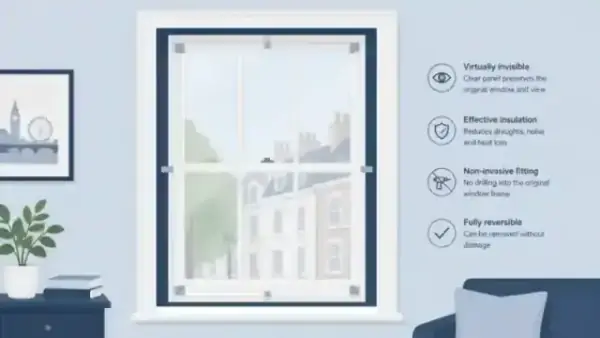
If you live in a Grade II listed property in London, you’ve likely experienced the "Heritage Tug-of-War." On one side, you have the biting winter draughts and the constant hum of London traffic leaking through your original single-paned windows. On the other, you have the strict, watchful eye of the local Conservation Officer, whose job is to ensure the historic integrity of your home remains untouched.
It can feel like you’re stuck in a freezing, noisy museum. But here is a secret that many homeowners discover only after a long, frustrating dive into planning permission: Conservation officers almost always prefer secondary glazing over window replacement.
In fact, while replacing windows in a listed building is often met with a flat "no" or a mountain of paperwork, adding a secondary layer is frequently seen as the gold standard for upgrading performance without losing your home's soul. Here is why secondary glazing is the winning move for both you and the heritage experts.
The "Repair Over Replace" Mandate
Maintaining a Grade II listed property comes with a unique set of responsibilities. The core philosophy of Historic England and local conservation departments is simple: repair is preferable to replacement.
When you propose to swap out your original timber frames for even the most convincing "heritage-style" double glazing, you are proposing the permanent removal of the building's historic fabric. To a Conservation Officer, that original glass and timber are irreplaceable.
Secondary glazing for listed buildings circumvents this issue entirely. Because the new unit is fitted to the interior, the original window stays exactly where it has been for the last century. You aren't destroying history; you’re protecting it.
Why Conservation Officers Love Reversibility
In the world of heritage preservation, "reversibility" is a magic word. It refers to any upgrade that can be undone in the future without damaging the original structure.
Secondary glazing for heritage windows is the ultimate reversible intervention. It doesn’t involve cutting into the masonry or ripping out frames. If a future owner 50 years from now wanted to return the house to its exact 18th or 19th-century state, they could simply remove the secondary units, leaving the original windows perfectly intact.
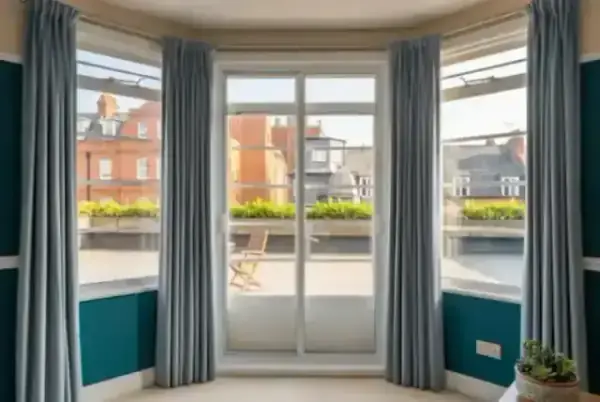
This is why, in many cases, adding secondary glazing doesn't even require formal listed building consent: provided the installation is discreet and doesn't interfere with historic shutters or decorative architraves. It’s the path of least resistance in a world of complex regulations.
The Specific Challenge of Sash Windows
If your home features the classic London sash, you know they are beautiful but notoriously difficult to insulate. Standard double-glazing units are often too thick for original sash boxes, leading to bulky, clunky replacements that ruin the "sightlines" (the slim, elegant lines of the window).
Sash window secondary glazing is designed to mirror those sightlines perfectly. We use ultra-slim frames that align with your existing meeting rails. From the street, the upgrade is virtually invisible. From the inside, you get all the benefits of a modern home:
- Noise Reduction: By creating a significant air gap (usually 100mm to 150mm) between the two layers of glass, you can achieve a 70-80% reduction in noise. That's the difference between hearing every siren on the street and enjoying a quiet evening.
- Thermal Efficiency: It stops the "waterfall" effect of cold air dropping off single glass panes. You’ll find your U-values (the measure of heat loss) drop significantly, meaning lower heating bills and a much warmer living room.
- No Planning Headache: Because it is an internal addition, it rarely triggers the same scrutiny as an external change.
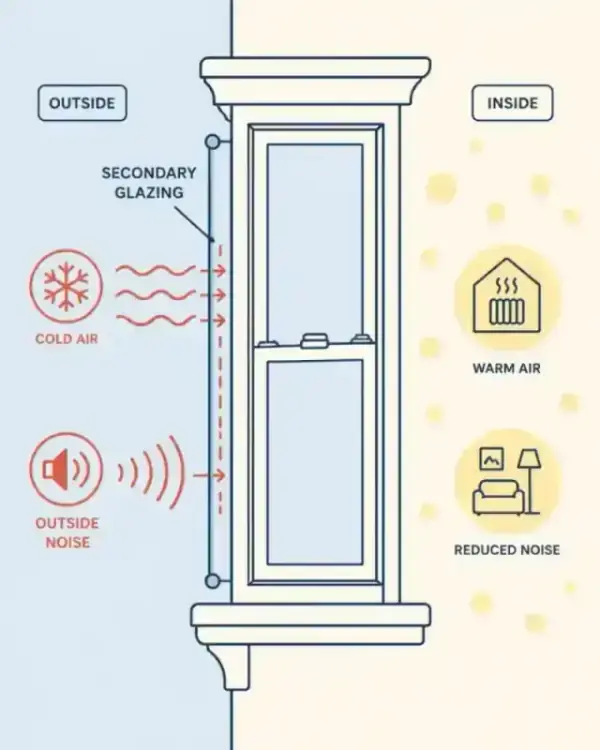
Grade II Listed Building Secondary Glazing: Performance Without Compromise
There’s a common misconception that secondary glazing is a "compromise" or a "budget version" of new windows. In reality, for acoustic performance, secondary glazing often outperforms new double glazing.
The large air gap between the original window and the secondary pane acts as a powerful buffer that a slim double-glazed unit simply cannot match. If you are dealing with the roar of a busy London road, acoustic-grade secondary glazing is actually the superior technical choice.
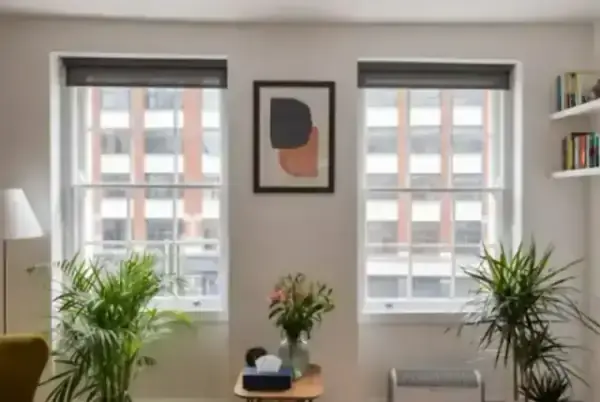
Bridging the Gap Between Past and Present
We understand that you love your home’s character: the way the old glass ripples in the light and the solid feel of the original timber. You shouldn't have to sacrifice that charm just to stay warm.
Choosing Grade II listed building secondary glazing allows you to satisfy the requirements of your Conservation Officer while finally making your home comfortable. It's a pragmatic, respectful solution that treats your property with the care it deserves.
Taking the Next Step
If you’re tired of the draughts but dread the thought of a planning battle, we can help. Our team specializes in heritage properties across London, ensuring every installation is discreet, high-performing, and respectful of your home’s history.
Ready to quiet your home and cut those heating bills?
Contact us today for a free survey. We’ll walk you through the best opening options for your specific windows: whether that’s vertical sliders for your sashes or hinged units for your casements: and show you how we can make your heritage home fit for modern living.
- * *
WhatsApp us