
If you’ve ever tried to sleep through the 2:00 AM roar of a delivery truck on Kensington High Street or the echoing chatter of pub-goers near Earl’s Court, you know that living in W8 or W14 often comes with a "soundtrack" you didn't ask for. Kensington is beautiful, but its historic architecture was never built to handle 21st-century decibels.
The short answer to your noise problem? Secondary glazing. It is the single most effective way to soundproof a Kensington flat, typically cutting external noise by 70-80%. Because it’s an internal addition, it bypasses the strict conservation rules that often block traditional double glazing.
We’ve spent years helping Londoners reclaim their peace. To help you see what’s possible, we’ve pulled together five real-world transformations from the neighborhood.
1. The Mansion Block on Kensington High Street
The Problem: Constant traffic "hum" and heavy sirens.
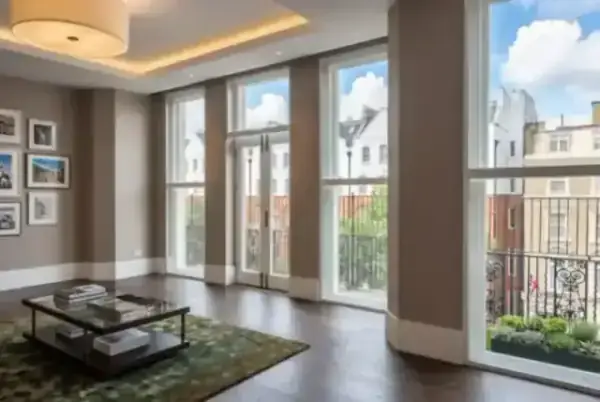
Kensington's red-brick mansion blocks are iconic, but they are notorious for acting like acoustic resonators. One of our clients lived in a stunning third-floor apartment overlooking the High Street. Despite the solid walls, the original single-glazed sash windows were vibrating every time a bus went past. The noise was constant, averaging 65-70 decibels: roughly the sound of a vacuum cleaner running in your living room all day.
The Solution: We installed bespoke horizontal sliding secondary glazing. We used acoustic laminate glass, which is specifically designed with a PVB interlayer to disrupt sound waves.
The Result: By creating a 100mm air gap between the original window and the new internal panel, we broke the "bridge" that sound travels across. The traffic became a distant whisper, and the client finally stopped waking up at 5:00 AM when the first delivery trucks arrived.
2. The Victorian Terrace near Earl’s Court
The Problem: Pedestrian noise and nightlife.
If you live in one of the grand Victorian conversions near the station, you know the struggle isn't just cars: it’s people. Our client here had a beautiful first-floor bedroom, but the windows faced a popular walking route to the local pubs. Laughter, shouting, and the "clack-clack" of heels on the pavement were keeping them awake until well past midnight.
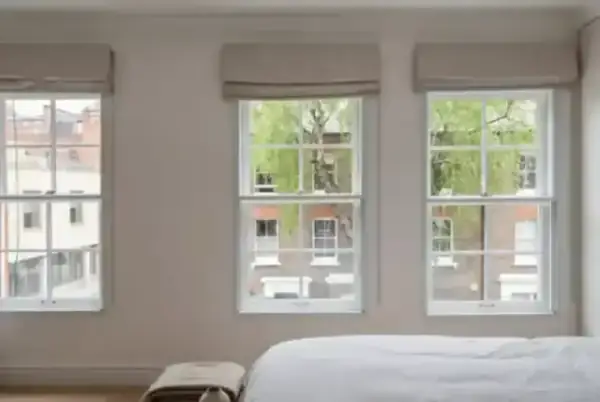
The Solution: Because the windows were traditional sashes, we used vertical sliders that matched the original sightlines perfectly. We focused on achieving 80% noise reduction by ensuring an airtight seal. Sound is like water: if air can get in, noise can get in.
The Result: The client described the change as "flipping a switch." The sharp, high-frequency noises of voices and heels were almost entirely filtered out, turning their bedroom back into a sanctuary.
3. The Grade II Listed Apartment in South Kensington
The Problem: Conservation restrictions vs. freezing winters.
Living in a listed building means you are often stuck with drafty, single-paned windows that you aren't allowed to replace. This client was dealing with a "double whammy": the noise of the nearby museums and a flat that was impossible to keep warm in January. They felt they had to choose between their home's heritage and their own comfort.
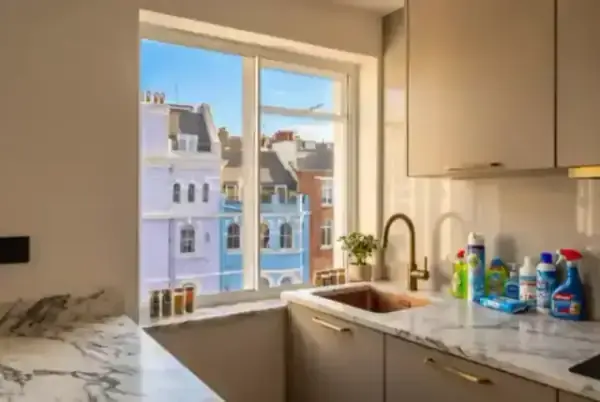
The Solution: Secondary glazing is the "hidden" hero for listed buildings in London. We installed slimline frames that were virtually invisible from the outside. We didn't just solve the noise; we improved the U-value (a measure of heat loss) significantly.
The Result: The conservation officer was happy because the original fabric of the building remained untouched. The client was happy because their heating bills dropped, and the sirens from the nearby main roads were muffled to a point where they were no longer a nuisance.
4. The Modernized Mews House
The Problem: Echo and "Hard" Noise.
Mews houses are tucked away and generally quieter, but they often feature hard surfaces: stone floors, sleek kitchens, and large windows: that cause sound to bounce around. Our client had recently renovated but found that even the slight noise from the mews outside felt amplified inside. They also wanted a modern look that didn't feel "clunky."
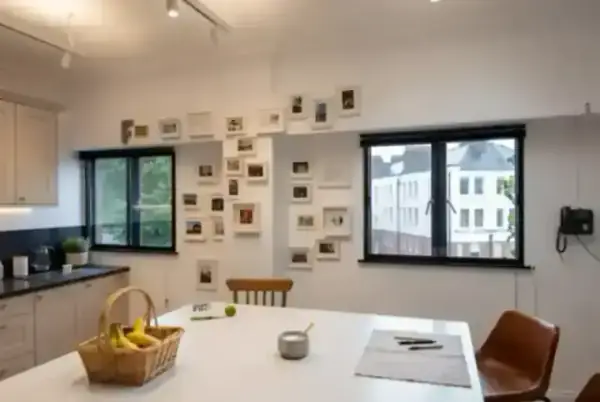
The Solution: We used black-framed secondary glazing to match their contemporary interior design. These frames were sleek and minimalist, fitting right into the industrial-chic aesthetic of the renovation.
The Result: The secondary glazing acted as an extra layer of "dampening," reducing the echo within the rooms while blocking the occasional noise from passing pedestrians in the mews. It proved that soundproofing doesn't have to look like a compromise.
5. The Ground-Floor "Garden" Flat
The Problem: Ground-level vibrations and security concerns.
Ground-floor living in Kensington often means your windows are just a few feet from the pavement. For this client, the issue was low-frequency vibration from the Underground and heavy buses, alongside a general feeling of vulnerability.
The Solution: We installed heavy-duty secondary glazing with 6.4mm laminate glass. Laminate glass is two sheets of glass stuck together with a plastic layer; it’s much harder to break and excellent at absorbing low-frequency rumbles.
The Result: The "thump-thump" of passing traffic was neutralized. As an added bonus, the extra layer of glass provided a significant security boost, making the client feel much safer in their home.
Why Secondary Glazing Wins in Kensington
You might be wondering why these homeowners didn't just opt for new double-glazed windows. In Kensington, the answer is usually Conservation Area restrictions. But even if you could replace them, secondary glazing is often the better choice for noise for one simple reason: the air gap.
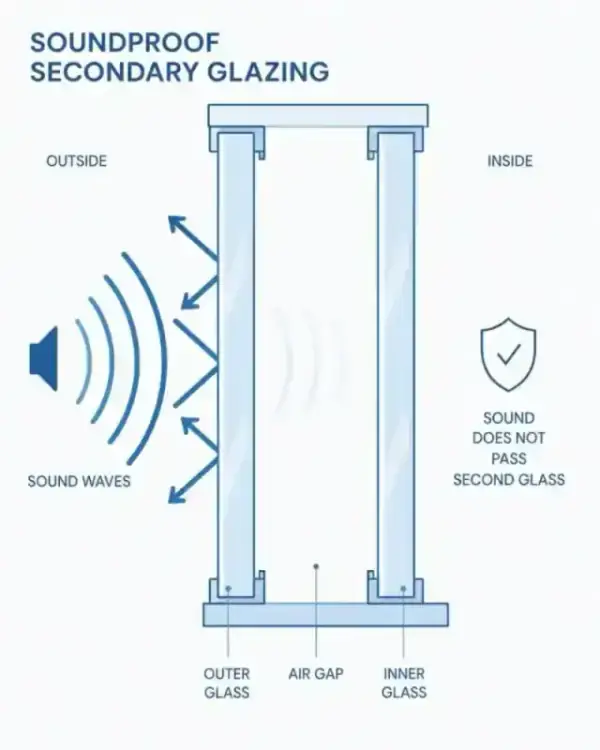
Standard double glazing has a very small gap (usually 16mm to 20mm) between the panes. While great for heat, this small gap can actually transmit noise through a "drum effect." Secondary glazing allows for a much larger gap (up to 100mm or more), which creates a genuine acoustic barrier that traditional windows simply can't match.
The Real-World Numbers
- Noise Reduction: Up to 80% (approx. 45-50 decibels).
- Heat Retention: Reduces heat loss by up to 65%.
- Cost: Usually 40-60% cheaper than full window replacement.
- Installation: Usually takes 1-2 days with zero mess and no need for scaffolding.
Ready to Reclaim Your Peace?
If you’re tired of the Kensington commute happening inside your living room, it’s time to look at your windows. You don't have to move house to find a quiet life; you just need to add a better layer of defense.
At Secondary Double Glazing London, we specialize in these historic transformations. We’ll come to your flat, measure your unique (and likely slightly wonky) window frames, and help you choose a style that disappears into your decor while making the noise disappear too.
Give us a shout for a quick chat or a survey: let’s get your home feeling like a home again.