
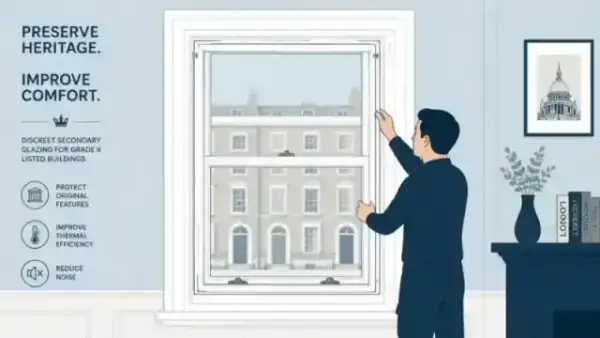
If you live in a Grade II listed building in London, you know the feeling. You love the character, the original timber, and that unique history that comes with every single-pane sash window. But you probably don’t love the rattling glass, the winter draughts that make your living room feel like a fridge, or the 6:00 AM roar of the city outside.
When you start looking for a fix, you’ll likely find yourself stuck between two paths: Secondary Glazing or Double Glazing.
Let’s get the direct answer out of the way first: For a Grade II listed home, secondary glazing is almost always the superior choice. It’s the solution favoured by Historic England, it’s usually exempt from the planning permission headaches that plague double glazing, and: surprisingly to some: it actually outperforms standard double glazing for noise reduction and thermal efficiency in period properties.
Here is why secondary glazing is the definitive winner for your heritage home.
The Regulatory Reality: Why Double Glazing is a "No-Go"
Living in a listed building means you are a temporary steward of history. The council and conservation officers are there to ensure that the "historic fabric" of the building isn't lost.
Standard double glazing usually involves removing the original single-pane glass and replacing it with a much thicker, heavier double-glazed unit. This often requires altering the original timber frame or, in many cases, replacing the window entirely.
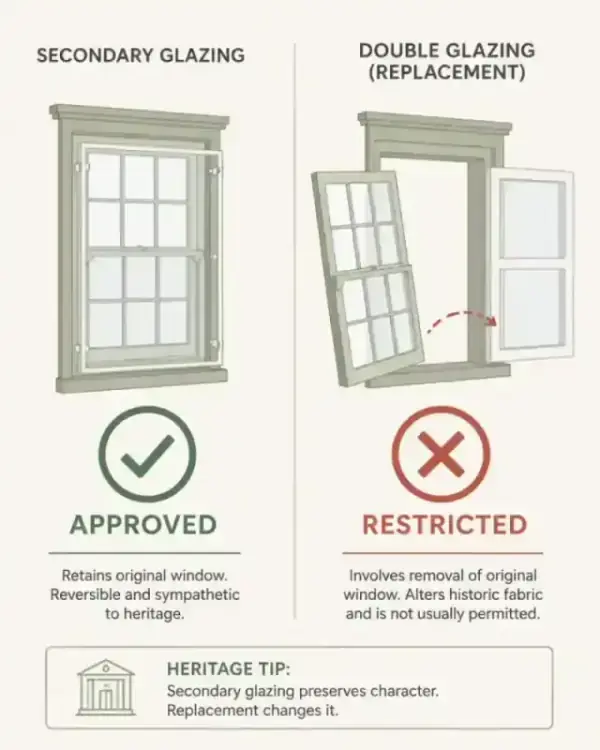
For a Grade II property, this is a massive red flag. Replacing original windows without Listed Building Consent is a criminal offence. Even if you apply for it, permission is frequently refused because modern double-glazed units change the external appearance of the building: the reflections look different, and the frames often become chunkier to support the extra weight.
Secondary glazing for listed buildings, however, is a game-changer. Because it is installed on the inside of your existing window and is fully reversible, it doesn't alter the external character of your home. In the eyes of a conservation officer, the original window remains untouched. This means you can often skip the planning drama entirely and still get all the modern benefits.
The Sound of Silence: Outperforming Double Glazing
Many of our customers in London are primarily looking for a way to block out the "city hum." Whether it’s the siren on the high street or the constant rumble of the red routes, single-glazed sash windows offer almost zero protection against noise.
You might assume that new double-glazed windows would be the best fix. However, the science says otherwise. Standard double glazing typically reduces noise by about 25–35 decibels. That’s good, but not great when you’re trying to sleep through a London night.
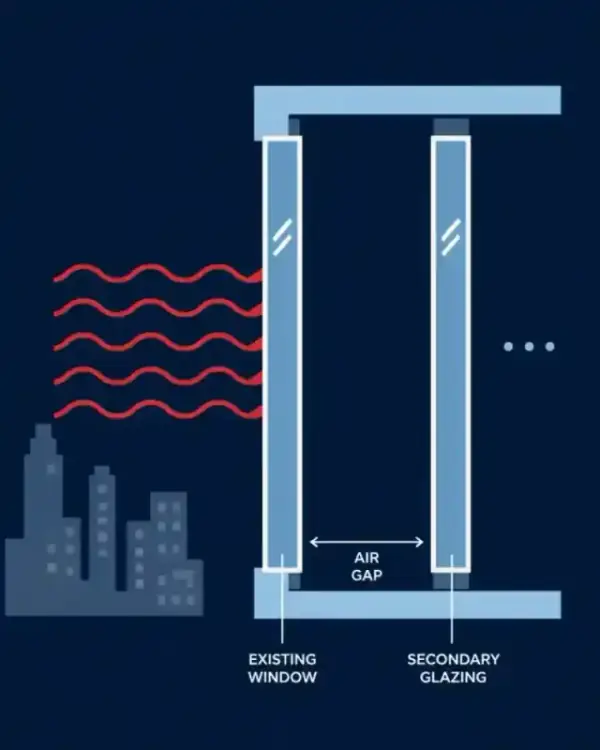
Because acoustic secondary glazing is installed as a separate unit, it creates a significant air gap (usually between 100mm and 150mm) between the original glass and the new layer. This gap is the secret sauce. It decouples the two panes of glass, making it incredibly difficult for sound vibrations to pass through.
Our systems can achieve up to a 54dB reduction in noise, which is roughly an 80% drop. To put that in perspective, secondary glazing is often five times more effective at soundproofing than standard replacement windows.
Keeping the Heat in (and the Bills Down)
Traditional sash windows are notorious for being "leaky." Heat escapes through the glass, but even more escapes through the gaps around the sash.
When we install sash window secondary glazing, we aren't just adding a pane of glass; we are creating a tight internal seal. This creates a pocket of air that acts as a thermal blanket for your home.
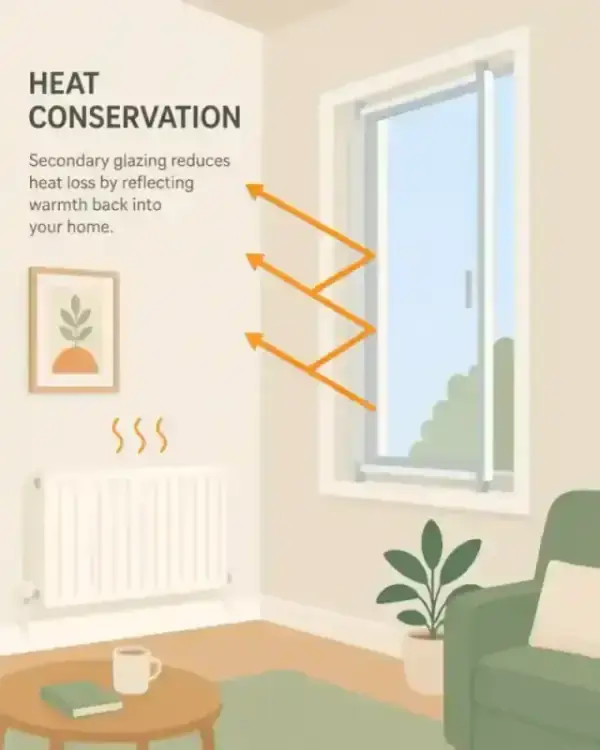
Research by Historic England has shown that adding secondary glazing with thermal glass can reduce heat loss through your windows by over 60%. For homeowners, this translates to a roughly 15% reduction in annual heating bills. You get a warmer, more comfortable home without having to compromise on the beautiful Victorian or Georgian aesthetics of your facade.
Cost and Disruption: The Practical Advantage
Let’s talk numbers. We know that home improvements in London are never "cheap," but there is a massive disparity between these two options.
- Cost: Secondary glazing costs are typically 40% to 60% lower than full window replacement. While a new bespoke timber double-glazed window might cost you £1,200 or more per opening, a high-quality secondary glazing unit usually sits between £200 and £400.
- Installation: Replacing windows is a messy, multi-week process. It involves scaffolding, dust, structural alterations, and almost certainly a need to redecorate your interior walls once the frames are swapped. Secondary glazing is installed within the existing window reveal. For most London homes, the entire installation takes just 1 to 2 days. No scaffolding, no redecorating, and no mess.
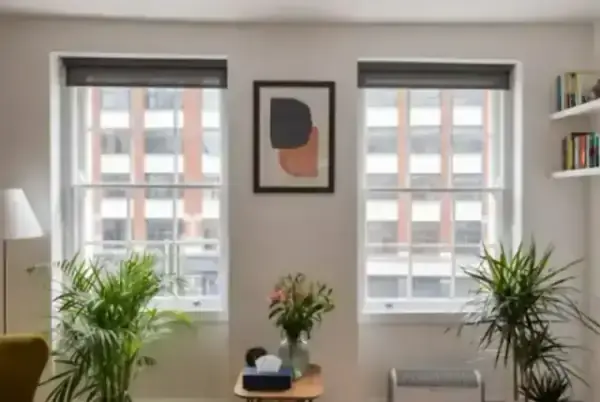
Which Style Suits Your Home?
One common misconception is that secondary glazing is a "one-size-fits-all" clunky plastic frame. That couldn't be further from the truth. Modern secondary units are made from slim-line aluminium and can be powder-coated to match your existing interior woodwork exactly.
- Vertically Sliding: These are the gold standard for sash windows. The secondary panels slide up and down, mirroring your original window so you can still open both for ventilation.
- Hinged Units: These open like a door, making them perfect for casement windows or where you need full access to the original glass for cleaning.
- Lift-Out Units: Ideal for smaller windows or those you rarely open, these panels can be simply lifted out when needed.
The "Neighborly" Verdict
If you were our neighbor asking for advice over the garden fence, we’d tell you this: Don’t fight the council for double glazing that might actually perform worse than the alternative.
Secondary glazing allows you to keep the soul of your Grade II home while enjoying the quiet and warmth of a modern build. It’s faster, cheaper, more effective at blocking noise, and: most importantly: it keeps the historic character of London’s streets alive.
If you’re ready to stop the draughts and finally get a quiet night’s sleep, your next step should be a professional survey. We can show you exactly how a discreet secondary layer can transform your home without changing a single thing about its heritage charm.
- * *
WhatsApp us