
Secondary Glazing 101: A Beginner’s Guide to Mastering a Condensation-Free Home
If you live in one of London’s beautiful period homes, you probably have a familiar, albeit frustrating, morning ritual. It starts with the sound of the alarm, followed by the sight of “crying” windows. You grab a towel: or a mountain of kitchen roll: and spend ten minutes wiping down the puddles of condensation that have pooled on your sills overnight.
It feels like a losing battle, doesn't it? You turn up the heating, but the windows stay cold. You open a vent, and the room turns into an icebox. For many of us in the city, especially those living in listed buildings or conservation areas, replacing those original sash windows isn't just expensive: it’s often legally impossible.
Here is the good news: you don't have to live with damp curtains and mouldy frames. Secondary glazing is the "hidden" hero of home improvement that solves the condensation puzzle without changing the face of your home. Let's dive into how it works, what your options are, and why it’s a total game-changer for your comfort.
Why Do Windows "Sweat" Anyway?
Before we talk about the fix, we need to understand the foe. Condensation isn't a mystery; it’s just physics. When the warm, moist air inside your home (from cooking, showering, or even just breathing) hits a cold surface (your single-pane glass), it cools down rapidly.
Once that air reaches its "dew point," it can no longer hold onto its moisture, so it dumps it right onto the glass. In a typical London winter, your original windows are basically ice-cold magnets for every bit of humidity in the room.
Secondary glazing breaks this cycle by adding a second, high-performance pane of glass on the inside of your existing window. This creates an insulating air gap: a buffer zone. The inner pane of glass stays much closer to your room’s temperature, meaning the warm air in your lounge never gets that "cold shock" that leads to those morning puddles.
The "Three Pillars" of Secondary Glazing
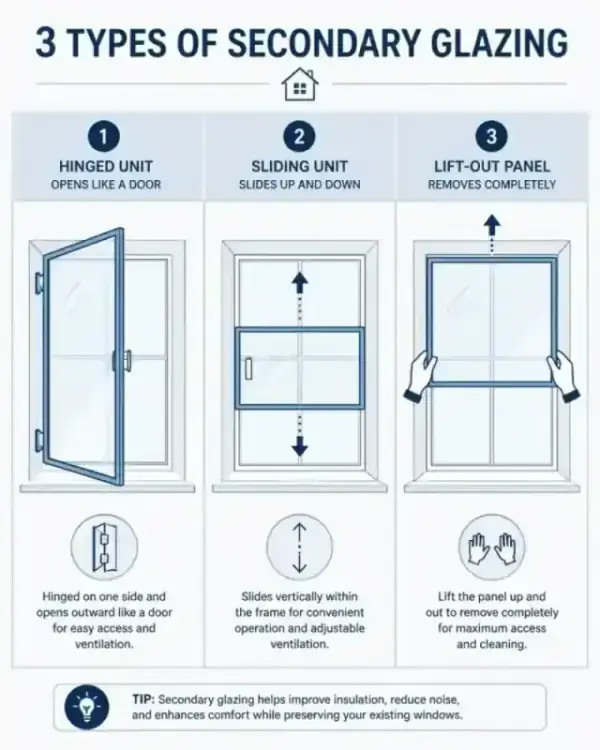
One size definitely doesn't fit all. Your home has its own personality, and your windows should reflect that. When we talk about secondary glazing benefits, we’re usually looking at three main types of units designed to blend seamlessly with your existing frames.
1. Sliding Units (Horizontal or Vertical)
If you have classic sash windows, vertical sliders are your best friend. They mirror the movement of your original windows, so you can still slide them up for a breeze in the summer. They use clever brush seals that keep the heat in and the noise out, while remaining almost invisible to the naked eye.
2. Hinged Units
These open just like a standard door or a casement window. They are perfect for windows where you need full access for cleaning or if you have a larger opening. Because they use compression gaskets, they offer some of the tightest seals available, making them incredible for window condensation solutions and soundproofing.
3. Lift-Out Panels
For those smaller windows or spots where you rarely need to open the original pane (like a hallway or a bathroom), lift-out panels are a cost-effective and sleek option. You simply lift the lightweight frame out of its track when you need to clean the original glass, and pop it back in for instant insulation.
The 48-Hour Transformation
One of the biggest misconceptions about upgrading windows is that your house will become a construction site for weeks. We’ve all heard the horror stories of scaffolding, dust, and "lost" installers.
Secondary glazing is different. Because we aren't ripping out your original frames, the process is remarkably clean and fast. For most London homes, the entire installation takes between 1 to 2 days.
Here’s what a typical timeline looks like:
- Day 1: Our team arrives and prepares the window reveals. We install the bespoke frames: made to the exact millimetre of your home: and ensure they are perfectly level.
- Day 2: We fit the glass panels, test the seals, and do a final "walk-through" with you to make sure everything slides or hinges exactly as it should.
There’s no need for re-plastering, no scaffolding, and you don’t even need to move your furniture very far. It’s a "surgical" upgrade rather than a "demolition" one. You can read more about how this compares to full replacements in our guide on secondary vs. double glazing.
More Than Just a Dry Sill
While stopping condensation is usually the reason people call us, they quickly realize there are other massive perks they didn't expect.
Silence is Golden
London is a noisy city. Whether it’s the hum of the North Circular, the screech of the Tube, or just the neighbor’s early-morning bins, single glazing lets sound straight through. By adding a secondary pane with a significant air gap (usually 100mm to 150mm), you can achieve up to an 80% reduction in noise. It’s the difference between hearing a bus in your living room and feeling like you’re in a library. Check out our ultimate guide to acoustic glass to see how we tackle city noise.
Slashing the Energy Bills
Let’s be real: heating a period home is expensive. You’re essentially paying to heat the street through those thin original panes. Secondary glazing acts like a thermal blanket. By trapping a layer of air, it prevents heat from escaping, which can lower your U-values (a measure of heat loss) significantly. In plain English? Your rooms stay warmer for longer, and your boiler doesn't have to work nearly as hard.
A Note for My Listed Building Neighbors
If you live in a Grade II listed property or a conservation area, you know the "planning permission" headache all too well. Local councils are (rightfully) protective of our city’s heritage.
The beauty of secondary glazing is that it is considered a reversible internal alteration. Because it doesn't change the external appearance of the building, it is almost always permitted. You get to keep the beautiful, wavy "crown glass" and the original timber sash while enjoying 21st-century comfort. It’s the best of both worlds: preserving history while protecting your health and wallet.
Is It Time to Ditch the Towel?
If you’re tired of the damp smells, the cold draughts, and the morning "window wipe," it’s time to look at a permanent fix. Secondary glazing isn't just about glass; it's about making your home the sanctuary it was meant to be.
Whether you’re in a Georgian terrace or a modern flat that needs a bit of extra "oomph," the solution is simpler and faster than you think. You don't need a massive renovation: just a smarter layer.
Ready to see how we can transform your space? Get in touch with us today for a friendly chat or a survey. Let’s make those crying windows a thing of the past.