
If you’ve ever sat in your living room in Kensington or Westminster and felt like the Piccadilly Line was running directly under your sofa, you’re not alone. Living in London’s most prestigious historic boroughs comes with a specific kind of "heritage tax": the constant hum of the city seeping through single-glazed windows that you aren't legally allowed to change.
The direct answer to reclaiming your home’s peace and quiet without a fight with the council is secondary glazing. By adding a discreet, high-performance internal layer to your existing windows, you can achieve a noise reduction of 70-80%: all while staying perfectly compliant with conservation and listed building rules.
In this guide, we’re looking at how your neighbors in Earl’s Court, Bayswater, and Bloomsbury transformed their drafty, noisy flats into silent sanctuaries.
The Earl’s Court Challenge: A Dual Threat of Rumble and Road
One of our recent projects in a Victorian mansion block in Earl’s Court (SW5) perfectly illustrates the modern London struggle. The resident was facing a "dual noise threat": the low-frequency rumble of the District and Piccadilly Lines and the relentless high-frequency hiss of 45,000 vehicles daily on the Cromwell Road A4.
Sustained noise levels were hitting 78 decibels (dB), with emergency vehicle sirens peaking at a staggering 92dB. For context, that’s louder than a lawnmower running in your hallway.
The Solution: The "Acoustic Sandwich"
To combat this, we didn't just add a thin pane of glass. We designed a bespoke system using:
- 10.8mm Stadip Silence acoustic laminate: This is a specialized glass with a PVB (polyvinyl butyral) interlayer that acts as a dampener, literally "absorbing" the vibration of sound waves.
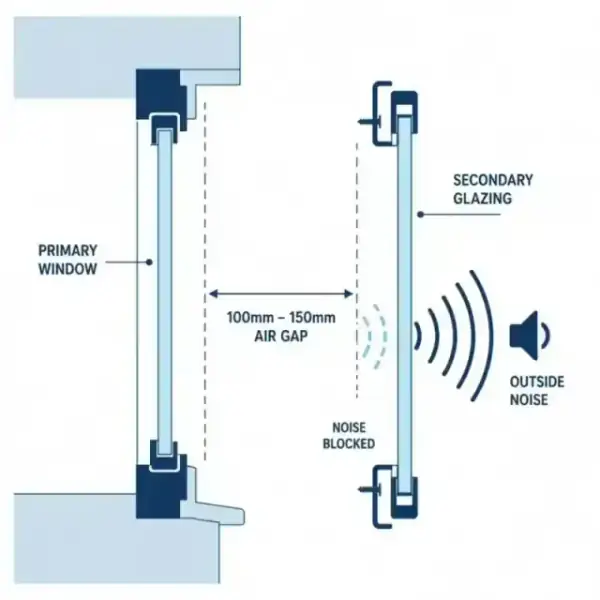
- 120mm Decoupled Cavity: The magic happens in the air gap. By creating a 120mm space between the original sash and our secondary unit, we created a massive buffer that breaks the sound's path.
- Vibration-isolating rubber gaskets: These prevent the sound from "flanking" or traveling through the frames themselves.
The Result: The traffic noise dropped from 78dB to below 28dB. That’s a 54dB reduction: taking the room from "busy construction site" levels to "quiet library" levels. Furthermore, the thermal performance (the U-value) improved from a drafty 5.0 to a snug 1.8 W/m²K, translating to roughly 65% savings on heating bills.
Protecting the Aesthetic in Bayswater and Westminster
For residents in Grade II listed buildings like those in Porchester Court, Bayswater, the challenge isn't just noise: it's the law. In Westminster and Kensington & Chelsea (RBKC), conservation officers are understandably protective of the external aesthetic.
Because secondary glazing London is installed internally and is entirely reversible, it bypasses the need for full planning permission in the vast majority of cases. It doesn't alter the outside of the building at all.
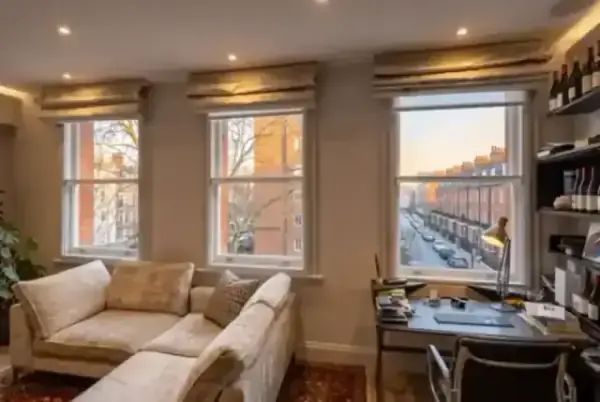
In Porchester Court, we utilized a mix of vertical and horizontal sliding units. These were color-matched to the original window frames, making them virtually invisible from both the street and the inside. The residents achieved the same 54dB noise reduction, proving that a Victorian property can offer 21st-century comfort without losing its soul.
Why the "Gap" is Your Best Friend
When people ask us about soundproofing flats Kensington, the first thing we talk about is the air gap.
In standard double glazing, the two panes of glass are only about 16mm to 20mm apart. While that’s great for heat, it’s far too narrow to stop heavy London traffic noise. To truly kill sound, you need space.
- 100mm to 150mm: This is the "sweet spot" for acoustic performance.
- EPDM Seals: We use twin-compression EPDM (ethylene propylene diene monomer) seals. Think of these like the seals on a high-end refrigerator; they ensure that not a single "leak" of sound gets through the edges.
Bloomsbury: Reaching Passivhaus Performance in a Georgian Townhouse
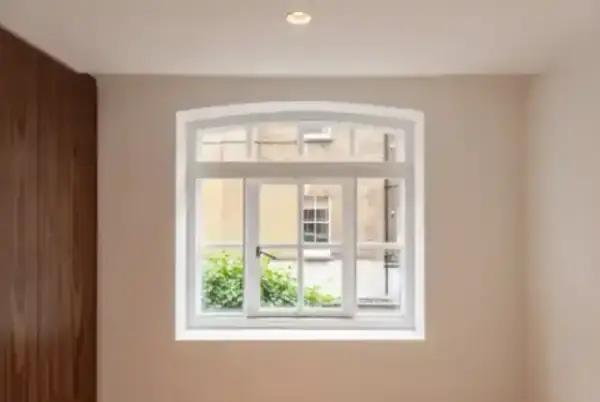
You might think that a 200-year-old Georgian townhouse is destined to be cold and loud forever. However, a project in Bloomsbury proved otherwise. By using specialized sash designs and Low-E (low emissivity) glass, we helped a homeowner achieve near-Passivhaus levels of thermal efficiency.
The Low-E coating reflects heat back into the room during winter and keeps it out during summer. Combined with heritage vertical sliders that mirror the original sash movement, the homeowner now enjoys near-total road noise removal and a home that stays warm long after the heating is turned off.
Why Conservation Officers Approve It
If you live in a conservation area, you probably know that getting anything approved can be a headache. However, secondary glazing is the "gold child" of window upgrades because:
- It’s Internal: It doesn't change the façade.
- It’s Reversible: It can be removed without damaging the original fabric of the building.
- It Preserves Original Glass: You get to keep your beautiful, wavy historic glass while enjoying the benefits of modern secondary glazing for period homes London.
Is Your Flat Ready for Silence?
Living in Kensington, Chelsea, or Westminster shouldn't mean sacrificing your sleep or your bank account to high energy bills.
If you're tired of the sirens, the tube rumble, and the drafts, the fix is simpler than a full window replacement: and usually 40-60% cheaper. Most installations take just a day or two, and because we don't remove your original windows, there’s no scaffolding, no mess, and no planning drama.

Ready to take the next step?
- Check your borough: Kensington & Chelsea and Westminster have 24-hour noise teams, but they can't stop the traffic. Only a physical barrier can.
- Measure your depth: See if you have 100mm of space on your internal window sill; that’s where the magic happens.
- Get an expert survey: We can show you exactly how a bespoke unit will look and perform in your specific room.
Don't let London’s buzz keep you up at night. Your historic home was built for elegance; let’s make it built for peace, too.
WhatsApp us