
If you own a Grade II listed property in London, you already know the drill: you want a warmer, quieter home, but the thought of navigating the planning department feels like a full-time job. You’ve likely heard that secondary glazing is the "safe" option: and you’re right. Historic England generally prefers it because it’s reversible and doesn't mess with your home's historic facade.
But here’s the quick answer you came for: While internal secondary glazing almost never requires full Planning Permission, it often requires Listed Building Consent (LBC).
Confusing? A little. But missing that distinction is the first trap. Falling into these planning traps doesn't just mean a headache; it can lead to legal enforcement and the forced removal of your new windows. Here is how to navigate the hurdles like a pro and get the comfort you deserve without the red tape.
1. The "Planning vs. Consent" Confusion
This is the big one. Many homeowners think "Planning Permission" is the only hurdle. Because secondary glazing is installed on the inside and doesn't change the external look of your home, it’s usually considered "Permitted Development" from a planning perspective.
However, Listed Building Consent (LBC) is different. LBC is concerned with the "character" and "fabric" of the building. Even if nobody can see it from the street, if you are attaching something to a listed structure, your local council usually wants to know about it.
How to avoid it: Always check your specific borough's guidelines. For example, some boroughs like Kensington and Chelsea have "Local Listed Building Consent Orders" that pre-approve certain types of secondary glazing for listed buildings, provided they meet strict criteria. If you aren't in a "pre-approved" zone, a quick call to a conservation officer is your best first move.

2. Assuming "Internal" Means "Invisible to the Law"
There’s a persistent myth that as long as you don't touch the outside, you can do whatever you want. In a Grade II listed home, the interior features: like original shutters, ornate architraves, and the timber of the window reveal itself: are often just as protected as the exterior brickwork.
If your secondary glazing prevents your original shutters from closing or requires you to cut into historic wood panelling, you’re in trap territory.
How to avoid it: Choose a bespoke system designed for heritage properties. We often use hinged secondary glazing or slimline sliding units that sit discreetly within the reveal, leaving your shutters and panelling completely functional and untouched.
3. The Visual Alignment Blunder
Conservation officers have a keen eye for "visual clutter." One of the fastest ways to get an LBC application rejected is to propose a secondary glazing unit where the horizontal or vertical bars don't line up with your original sash windows.
If you have a classic six-over-six sash window and your secondary glazing has a massive horizontal bar right in the middle of a pane, it "breaks the character" of the window.
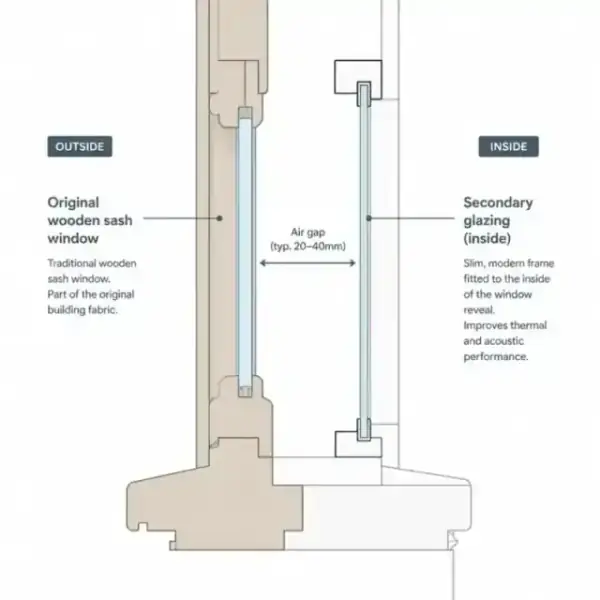
How to avoid it: Ensure your installer creates a "mirror" of your existing window. If you have sash window secondary glazing, the meeting rails of the secondary unit must align perfectly with the meeting rails of the original window. When done correctly, the secondary layer should be virtually invisible from both inside and out.
4. Making Irreversible Changes
The "Golden Rule" of Historic England is reversibility. They want to know that if someone in 100 years wanted to remove the secondary glazing, the original window would be exactly as it was in the 18th or 19th century.
If your installer plans to use heavy-duty industrial adhesives or massive screws that chew up the original Georgian timber, you’re asking for trouble.
How to avoid it: Specify "minimal intervention" fixings. We use slim, face-fixed or reveal-fixed frames that require only tiny, discreet pilot holes. If the unit is ever removed, the original fabric remains intact and easy to restore with a bit of wood filler and paint.
5. Overlooking the "U-Value" and Thermal Standards
While your main goal might be stopping that freezing draft, the council might be interested in how the upgrade affects the building's "breathability." Some people fall into the trap of using heavy, non-breathable materials that cause condensation to build up between the panes, eventually rotting the original historic timber.
How to avoid it: Use high-quality thermal glass that balances insulation with air movement. A U-value measures heat loss (the lower the number, the better). A standard single-pane window has a dismal U-value of around 5.8. Adding secondary glazing can drop that to about 1.8 to 1.2: making your home significantly warmer without "suffocating" the old timber. We also ensure a slight air gap and proper sealing to prevent that dreaded condensation.
6. The Maintenance and Access Oversight
Listed building windows need regular love and care. If you install a "fixed" secondary glazing unit that can’t be opened or removed easily, you can’t clean the back of your original glass or paint the original frames.
Conservation officers will often reject a proposal if they think it will lead to the long-term neglect of the primary window.
How to avoid it: Use lift-out units or hinged systems. This proves to the council that you are a responsible custodian of the building, committed to keeping those original sashes in tip-top condition for decades to come.
7. Skipping the Heritage Statement
When you do apply for LBC, many homeowners just send a photo and a quote. This is a trap. The planning office wants a "Heritage Statement": a fancy way of saying "I’ve thought about the history of this building and here is why my project won't ruin it."
How to avoid it: You don't need to be a historian. A simple, punchy document explaining that the secondary glazing for heritage windows is:
- Fully reversible.
- Internally fitted with no external visual change.
- Aligned with existing glazing bars.
- Necessary for energy efficiency (which helps preserve the building's use).
This proactive approach shows you respect the building’s status, which makes a "Yes" much more likely.
Why Secondary Glazing is the "Gold Standard" for Period Homes
It’s easy to feel like the rules are there to stop you from being comfortable, but they are actually there to protect the London skyline we all love. Secondary glazing is the unique solution where everyone wins.
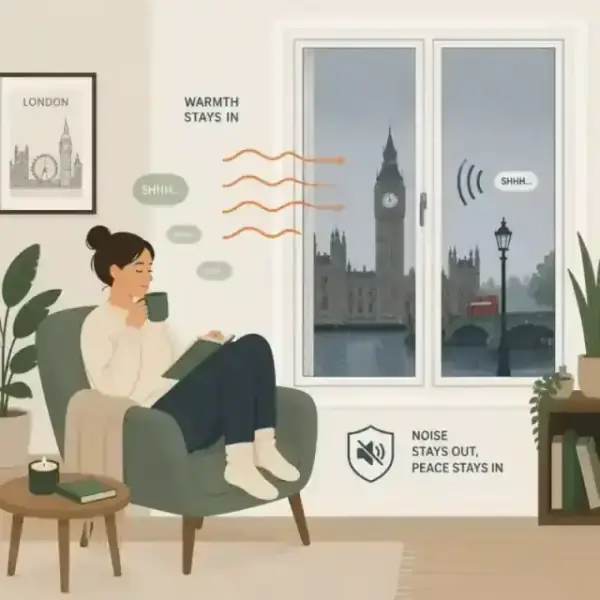
You get a 70-80% reduction in noise (taking that 80-decibel street roar down to a 30-decibel whisper) and you cut your heating bills by preventing the massive heat loss typical of old sashes. Meanwhile, the council is happy because the original glass: sometimes 200-year-old "crown glass" with its beautiful ripples: stays exactly where it is.
If you’re worried about getting it wrong, don't guess. We spend our days in London’s conservation areas and listed buildings, fitting acoustic glass and thermal solutions that satisfy even the pickiest conservation officers.
Whether you're dealing with a drafty bedroom in Islington or a noisy study in Chelsea, the right secondary glazing makes your house feel like a home again( without the planning drama.)