
If you live in a historic London flat, you know the trade-off. You get the high ceilings, the ornate cornicing, and the undeniable charm of a building that has stood for a century or two. But you also get the "London soundtrack": the constant hum of the A4, the rattle of the tube, and the inevitable winter draft that seems to go right through those original single-paned sash windows.
Can you actually have a quiet, warm home without ripping out the very heritage windows that made you fall in love with the place?
The answer is a resounding yes. In fact, for most of our clients in Kensington, Chelsea, and Westminster, secondary glazing London isn’t just a compromise: it’s the superior solution. By adding a discreet, high-performance second layer of glass inside your existing windows, you can cut noise by up to 80% and drastically lower your heating bills, all while keeping the council and heritage officers perfectly happy.
To show you exactly how this works in the real world, let’s look at three specific transformations across some of London’s most iconic (and noisy) postcodes.
1. The Kensington Fortress: Taming the Cromwell Road Roar
If there is a ultimate "boss level" for noise pollution in London, it's the Cromwell Road. This stretch of the A4 in Kensington is a constant river of taxis, buses, and lorries heading in and out of the city. For James and Catherine R., who live in a stunning Grade II listed Georgian terrace right on the main road, the noise wasn't just a nuisance: it was a sleep-depriver.
When we first visited, the noise levels inside their living room peaked at 78 decibels (dB). To give you some context, that's roughly the same volume as someone playing a radio loudly right next to your ear.
The Solution
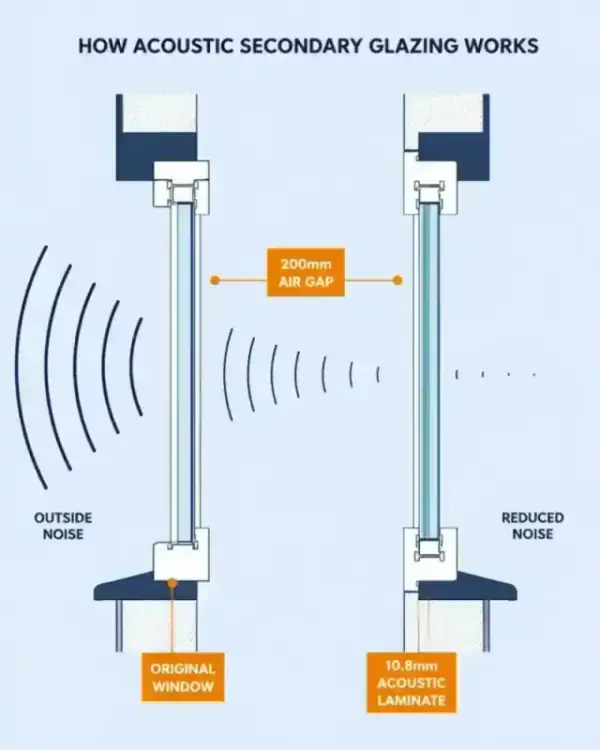
Because their property is Grade II listed, full window replacement was completely off the table. They needed soundproofing flats Kensington experts who understood heritage restrictions. We installed a heavy-duty secondary glazing system featuring 10.8mm acoustic laminate glass.
Why it worked
The "magic" here wasn't just the glass; it was the space. We created a 180mm air gap between the original sash window and our secondary unit.
- Acoustic Laminate: Think of this as a glass "sandwich" with a special noise-dampening interlayer that absorbs vibrations rather than letting them pass through.
- The Air Gap: This is the most critical part. A large gap decouples the two layers of glass, preventing the sound from "jumping" from the outside pane to the inside one.
The Result: The noise level inside plummeted from 78dB to 26dB. That is a 52dB reduction, which, in human hearing terms, feels like the traffic has been moved miles away. 26dB is quieter than a library: it's the level of a soft whisper. James and Catherine can now enjoy their morning coffee in Kensington without feeling like they're sitting in the middle of a motorway.
2. The Notting Hill Sanctuary: Silence Above the Westway
Notting Hill Gate (W11) is one of the most desirable places to live, but for David and Sarah F., their Victorian garden-flat conversion had a major drawback: it sat perilously close to the elevated A40 Westway motorway.
The low-frequency rumble of heavy vehicles on the Westway is notoriously difficult to block. Ordinary double glazing often struggles with these deep, vibrating sounds. Their original Victorian windows were beautiful, but they offered about as much protection as a sheet of paper.
The Transformation
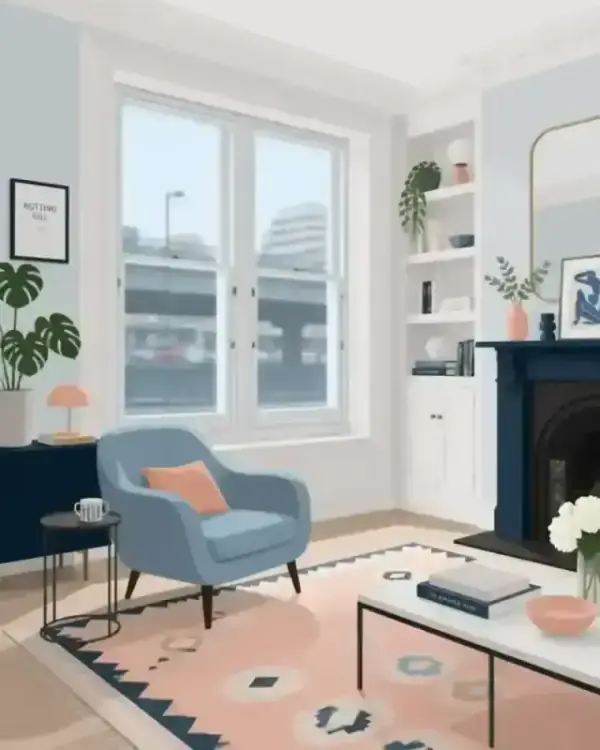
For David and Sarah, the goal was to create a peaceful bedroom sanctuary. We used a similar high-spec approach to the Kensington project but pushed the air gap even further to 200mm.
When you are dealing with secondary glazing for period homes London, every millimeter of that cavity counts. By using a slightly different glass thickness for the secondary pane than what is in the original window, we prevented "sympathetic resonance": a technical way of saying we stopped the two windows from vibrating at the same frequency and passing the noise through.
The Numbers:
- Outside Noise: 80dB (The roar of the A40).
- Inside After Installation: 28dB.
- The Experience: "It’s like someone hit the mute button on London," David told us. Beyond the noise, they also noticed the "cold spot" next to the window vanished instantly.
3. The Belgravia Pioneer: A Grade II Refurbishment Masterclass
While noise is often the primary concern, for historic properties in Westminster, thermal efficiency is becoming just as vital. Take the case of 119 Ebury Street in Belgravia. This was a grand Grade II listed townhouse conversion that aimed for something nearly impossible: a BREEAM "Outstanding" rating.
BREEAM is the world’s leading sustainability assessment, and getting an "Outstanding" mark for a listed building is like winning an Olympic gold medal for home improvement. The challenge was to make the building incredibly airtight and warm without changing the look of the historic facade.
The High-Tech Approach
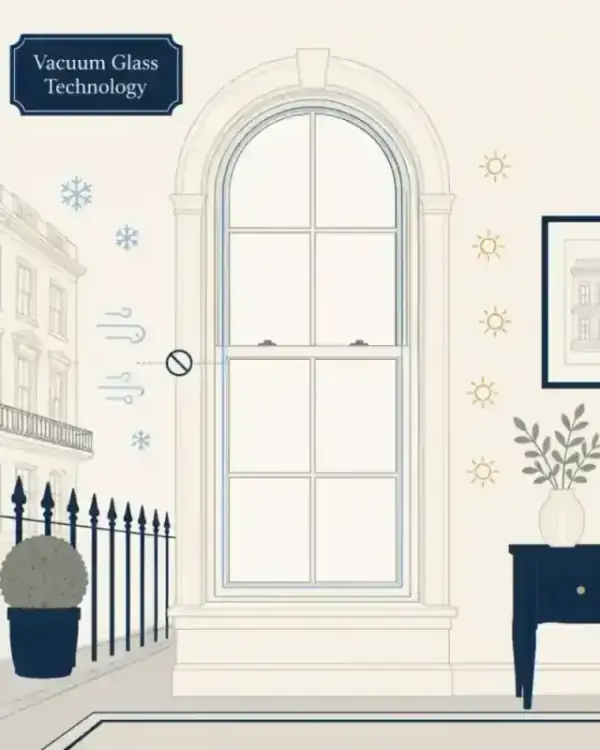
We worked alongside Grosvenor and Westminster Council to implement a solution using Selectaglaze Series 25 vertical sliding units. But the real star here was the glass: Pilkington Spacia™.
Explaining the Tech (Simply)
Pilkington Spacia is a vacuum-insulated glass. Standard double glazing uses a gap filled with gas (like Argon), but this vacuum glass has all the air sucked out between two thin panes.
- U-Values Explained: In the world of insulation, we talk about U-values. The lower the number, the better the window is at keeping heat in. A typical single-pane window has a U-value of about 5.8.
- The Result: By adding the secondary glazing with vacuum glass, the windows at Ebury Street achieved a U-value of 1.0.
This allowed the property to become the first listed residential building in the UK to hit that "Outstanding" rating. It proved that you don't need to choose between a warm home and a historic one. You can read more about how to succeed with listed building upgrades here.
Why These Transformations Matter for Your London Flat
If you're reading this while wearing a thick jumper inside your own living room, or if you find yourself turning up the TV volume every time a bus goes by, you've likely considered replacing your windows. But in London, that's often a headache you don't want.
- Planning Permission: If you are in a conservation area or a listed building, getting permission to change your windows can take months (and is often flat-out rejected). Secondary glazing usually requires no planning permission because it's an internal, reversible change.
- Cost: Full heritage-style double-glazed sash windows are beautiful, but they are incredibly expensive. Secondary glazing is typically 40-60% cheaper and provides better noise reduction than standard double glazing ever could.
- The "Gap" Advantage: As we saw in Kensington and Notting Hill, that air gap is your best friend. Double glazing has a tiny 16-20mm gap. Our secondary systems use gaps of 100mm to 200mm. For noise, there is simply no contest: secondary glazing wins every time.
How to know if your flat is a candidate?
Most period homes in London are perfect for this. Whether you have arched windows, sash windows that still slide, or even bespoke casement frames, there is a secondary unit designed to match.
- For Noise: Look for acoustic laminate glass and a gap of at least 100mm.
- For Thermal: Look for Low-E glass or vacuum glass options to slash those energy bills.
- For Aesthetics: Choose slimline frames that align perfectly with your original window's meeting rails. When done right, you’ll forget they’re even there.
For a deeper dive into the technical side, check out our guide on achieving 80% noise reduction.
Ready to quiet your corner of London?
Living in a historic flat shouldn't mean living with the noise and the cold. As these cases in Kensington, Notting Hill, and Belgravia show, the right secondary glazing can turn a drafty, loud space into a peaceful sanctuary without losing an ounce of its original character.
If you’re tired of the Westway or the A4 crashing into your living room, the next step is simple. Stop looking at replacements and start looking at enhancement. A professional survey can show you exactly where those drafts are coming from and how much of a gap we can create to finally bring some peace to your home.
Your windows are a part of London’s history. Let's keep them that way: just a lot quieter and warmer.