
Living on a "red route" in London has its perks: everything you need is on your doorstep, from the boutiques of Kensington High Street to the greenery of Holland Park. But for many homeowners in Victorian conversions, that convenience comes with a relentless soundtrack of sirens, idling buses, and the low-frequency rumble of heavy traffic.
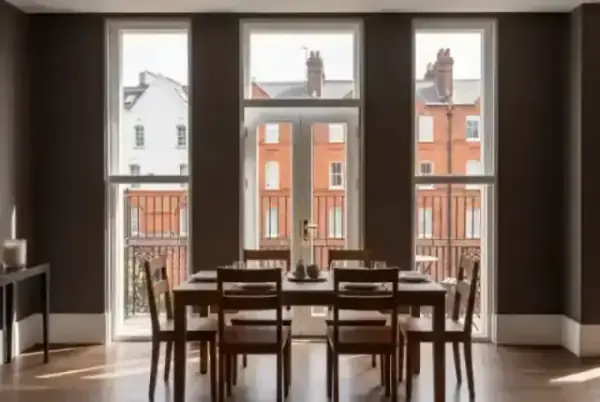
We recently worked with a homeowner in a stunning Grade II listed flat just off the High Street. The property was beautiful, boasting original single-glazed sash windows that were a key part of its heritage charm. The problem? Those same windows were effectively "acoustic sieves." With external noise levels regularly hitting 75–80 decibels (dB), the residents weren't just hearing the street: they were living in it.
The Red Route Reality: Noise and Drafts
For this specific Kensington flat, the challenges were three-fold. First, the noise was constant. On a busy red route, traffic doesn't really stop, and the night-time roar was making deep sleep nearly impossible. Second, the original 19th-century sashes were notoriously drafty, leading to skyrocketing heating bills and a living room that felt chilly even with the radiators on full blast.
Finally, because the building is Grade II listed, the Royal Borough of Kensington and Chelsea (RBKC) had strict rules. Full window replacement with modern double glazing was strictly off the table. Any solution had to be:
- Internal and discreet: Invisible from the street.
- Fully reversible: No permanent damage to the historic window frames.
- Effective: It needed to provide a massive jump in performance without altering the property’s external appearance.
The Solution: Bespoke Secondary Glazing
When we surveyed the property, we knew a standard "off-the-shelf" fix wouldn't do justice to the architecture. We recommended a custom installation of secondary glazing for period homes London specifically designed to mimic the lines of the existing sashes.

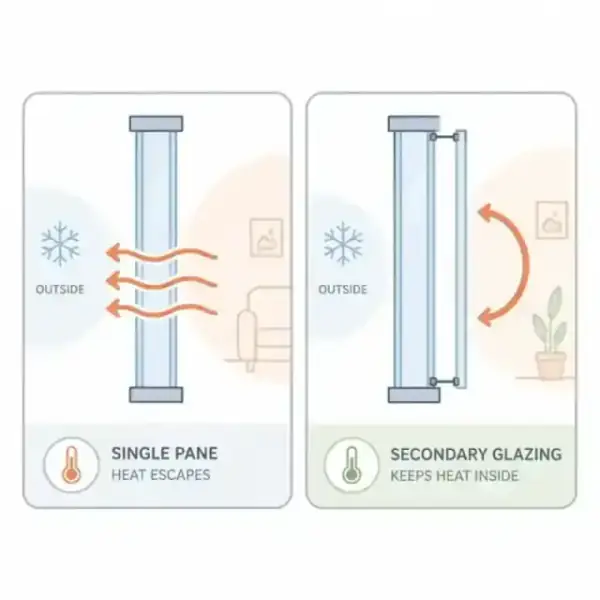
To tackle the noise, we opted for 6.4mm acoustic laminate glass. Unlike standard glass, acoustic laminate features a special interlayer that absorbs sound vibrations rather than letting them pass through. We installed these units with a 100mm air gap between the original window and the new secondary layer. This gap is the "secret sauce" of soundproofing flats in Kensington; it decouples the two layers of glass, preventing sound waves from traveling easily from the outside world into the home.
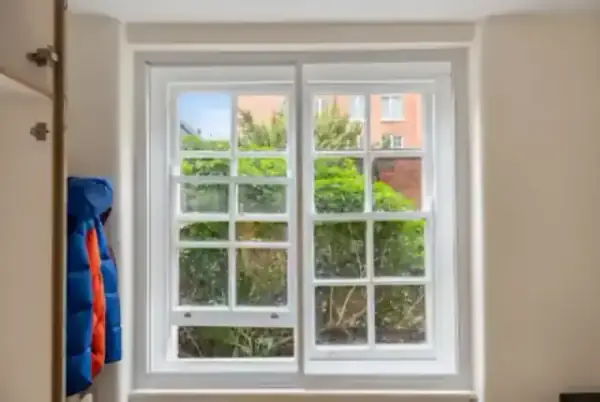
For the living room, we used horizontal sliding secondary glazing that aligned perfectly with the original window bars, ensuring that the view remained clean and the heritage character was preserved.
Why Secondary Over Replacement?
Many Londoners assume they need full double glazing to see real results, but in a period setting, secondary glazing London often performs better for noise reduction. While a standard double-glazed unit has a narrow gap (usually 16-20mm), our secondary system allows for a much larger cavity. This larger air cushion is far more effective at dampening the low-frequency drone of Kensington traffic.
Furthermore, our solution was roughly 50% cheaper than what a full (and likely prohibited) replacement would have cost. The installation took just two days, with zero scaffolding and no need for the owners to redecorate their beautifully finished interior.
The Result: A 54dB Sanctuary
The transformation was immediate. After the installation, we measured the internal noise levels again. The results were staggering:
- Noise Reduction: We achieved a reduction of roughly 70-80% in perceived noise. The 80dB "roar" from the street was muffled down to a whisper, bringing the indoor levels close to the 30-35dB range recommended for a healthy sleeping environment.
- Thermal Efficiency: The drafts were gone. By creating a second seal, we significantly reduced heat loss. The owner estimated a 15% reduction in their heating bills within the first winter.
- Condensation Control: One unexpected bonus was the reduction in condensation on the original sashes. The secondary layer kept the inner glass at a more stable temperature, preventing the "crying windows" typical of London winters.
Is Your Flat Ready for a Change?
Living in a historic London borough shouldn't mean sacrificing your peace of mind or your comfort. Whether you are dealing with the vibration of the District Line or the constant thrum of the Kensington High Street red route, secondary glazing for period homes offers a way to modernize your living standards without losing your home's soul.
If you're wondering whether your sash windows are up to the task of another London winter (or another night of traffic noise), we can help. Our team specializes in secondary glazing vs double glazing comparisons for listed buildings, ensuring you get the performance you need within the rules of your borough.
Quick Takeaways from the Kensington Project:
- Acoustic Glass is King: For high-noise areas like Kensington, standard glass isn't enough. Demand acoustic laminate.
- Air Gaps Matter: Aim for a 100mm–150mm gap for maximum soundproofing.
- Respect the Listing: Choose a supplier familiar with RBKC’s Local Listed Building Consent Order (LLBCO) to ensure your upgrade is fully compliant.
- Minimal Mess: Most installations happen from the inside, meaning no scaffolding and no disruption to your street-side facade.
Ready to turn down the volume on London? Contact us today for a survey and discover how a bespoke secondary layer can finally bring silence to your nights.
WhatsApp us