
If you’ve ever lived near Kensington High Street, you know the specific soundtrack that comes with the territory. It’s a mix of the low-frequency rumble of the number 9 bus, the occasional siren, and the constant hum of a city that never quite sleeps. It’s vibrant and exciting: until you’re trying to have a conversation or get a decent night’s rest behind a single-pane Victorian sash window.
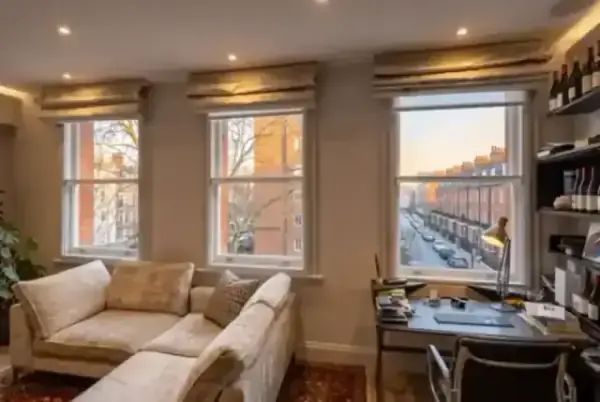
We recently worked with a homeowner, Sarah, who lived in a beautiful first-floor flat in a Kensington conservation area. Her home had everything: high ceilings, original cornicing, and those iconic floor-to-ceiling timber windows. But it also had a major problem. The windows that gave the flat its character were also letting in every ounce of Kensington’s chaos.
Sarah was facing a dilemma common to many in West London: how do you achieve effective soundproofing flats Kensington without ruining the very heritage features that make the property special?
The Problem: Draughts, Decibels, and Restrictions
When we first visited Sarah’s flat for a survey, the issues were clear. Her original windows were charming but structurally "tired." Because the property is in a conservation area, simply ripping them out for modern uPVC wasn’t an option. Even with the Royal Borough of Kensington and Chelsea’s updated guidelines on window replacements, matching the exact heritage profile of those massive sashes with double glazing is incredibly expensive and often requires a mountain of paperwork.
Sarah’s main complaints were:
- Constant Noise: The traffic noise was peaking at around 65-70 decibels (dB) inside her living room: roughly the same volume as a vacuum cleaner running constantly.
- Persistent Draughts: In the winter, the single glazing offered zero thermal resistance, making her heating bills skyrocket while she still felt a chill.
- Preservation Needs: As a leaseholder, she needed a solution that wouldn't alter the external façade or require complex planning permission.
The Solution: Bespoke Acoustic Secondary Glazing
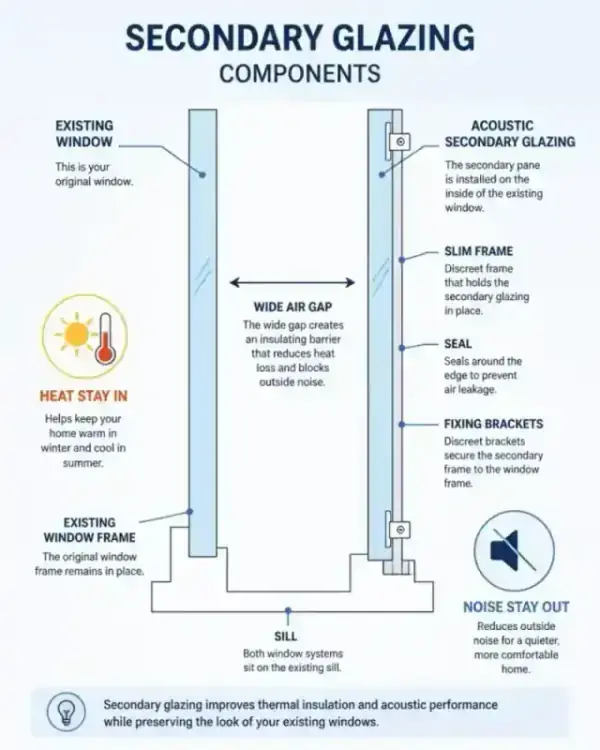
For a property like this, secondary glazing London specialists almost always recommend the same thing: an internal, independent window system. Unlike standard double glazing, secondary glazing allows for a much larger "air gap" between the original window and the new internal pane. In the world of acoustics, that gap is your best friend.
We designed a bespoke solution for Sarah’s flat using:
- Acoustic Laminated Glass: We opted for specialist acoustic glass which features a noise-dampening interlayer. This is specifically designed to disrupt sound waves, particularly the low-frequency rumbles from heavy traffic.
- Hinged Opening Units: To ensure Sarah could still access her original windows for cleaning and ventilation, we installed hinged secondary glazing. These units open just like a standard door or window, maintaining the functionality of the room.
- Perfect Alignment: We colour-matched the slimline aluminium frames to her existing white timber frames. We also aligned the meeting rails of our units with the horizontal bars of her sashes. This makes the secondary glazing virtually invisible from the street.
The Transformation: From 70dB to Silence
The installation took our team just over a day. Because secondary glazing is fitted to the internal "reveal" or the face of the existing window, there’s no need to mess with the brickwork or the original timber. It’s a clean, non-intrusive process: no scaffolding required.
The results were immediate and, quite frankly, transformative.
Noise Reduction
By creating a 100mm air gap between the original Victorian sash and our acoustic unit, we managed to reduce the incoming noise by roughly 80%. In technical terms, we dropped the internal noise levels from a disruptive 70dB to a peaceful 35-40dB. To Sarah, it felt like someone had finally found the "mute" button for the street outside.
Thermal Comfort
While Sarah's primary goal was soundproofing, the secondary layer acted as a powerful thermal insulator. The "U-value" (the rate of heat loss) of a single-glazed window is typically around 5.8. By adding our bespoke secondary unit, we brought that down to under 1.8. This means her flat stayed warmer for longer, and those persistent draughts were completely eliminated.
Why Secondary Glazing is the Choice for Period Homes
If you’re looking at secondary glazing for period homes London, you’re likely trying to balance modern comfort with historic charm. Here is why Sarah's project was such a success:
- No Planning Hassles: Because it is an internal addition, it rarely requires planning permission, even in the strictest Kensington conservation zones or listed buildings.
- Cost-Effective: The total cost was approximately 50% less than what a high-quality, heritage-approved full window replacement would have cost.
- Reversible: If a future owner ever wanted to return the windows to their "original" state (though we can't imagine why they'd want the noise back!), the units can be removed without damage.
The Result: A Quiet Sanctuary
A few weeks after the installation, we caught up with Sarah. She told us that for the first time in three years, she’d slept through the night without being woken up by the early morning delivery trucks. Her living room, once a place she avoided during peak traffic hours, had become her favourite spot to read and work.
Transforming a London home doesn’t always require a massive renovation or a fight with the local council. Sometimes, the most effective solution is the most discreet one. If your Victorian windows are letting the city in, bespoke secondary glazing could be the key to finally finding your calm in the chaos.
Ready to reclaim your peace and quiet?
Whether you’re dealing with the rumble of Kensington High Street or the chill of a drafty sash, we’re here to help. Our team specializes in heritage-sensitive installations that deliver real-world results.
Give us a call or book a survey today, and let’s see how we can transform your home.