
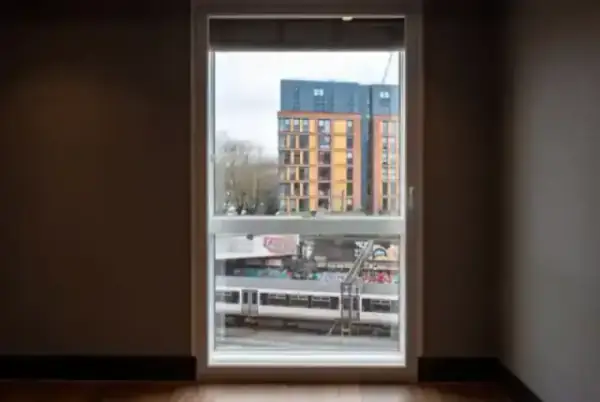
If you live on an "Important Area" according to Transport for London: better known to most of us as a Red Route: you know the specific, rhythmic roar of the city. Whether it’s the A10 in Dalston or the A202 through Camberwell, the sound of a double-decker bus accelerating or a freight lorry's air brakes isn’t just background noise; it’s a physical presence in your living room.
When we visit homeowners along these routes, the question is always the same: "Can I actually get a full night's sleep without hearing the 5:00 AM traffic?"
The answer is a definitive yes, but it requires moving past "standard" solutions and looking at the actual physics of sound. By applying acoustic science, we can take a 70dB facade and turn the interior into a 30dB whisper: the gold standard for restful sleep.
The Decibel Trap: Why 70dB is Louder Than You Think
To understand why London’s red routes are so challenging, we have to look at the decibel (dB) scale. Unlike a ruler, where 2cm is twice as long as 1cm, decibels are logarithmic. This means every 10dB increase represents a tenfold increase in sound intensity and is perceived by your ears as roughly doubling the loudness.
A typical London red route during the day hits around 70dB at your window. For context, the World Health Organization recommends indoor levels stay below 30dB for a bedroom. When you're sitting with 70dB outside and standard single-glazed sash windows, you're likely experiencing 45–50dB indoors. That’s the difference between a quiet library and someone running a vacuum cleaner in the next room.
To bridge that gap, we don't just need a "better window." We need a system that understands how sound moves.
The Physics of the "Quiet Zone"
Sound is essentially a pressure wave traveling through the air. To stop it, you need to rob those waves of their energy. In the world of noise reduction windows, this is achieved through three scientific principles: Mass, Dampening, and Decoupling.
1. The Mass Law
The heavier an object is, the harder it is for sound waves to vibrate it. Standard 4mm window glass is simply too light to stop the low-frequency rumble of a bus engine. By adding a secondary layer of thicker glass: typically 6mm or 6.8mm acoustic laminate: we dramatically increase the "mass" of your window system.
2. The Power of the 100mm Air Gap
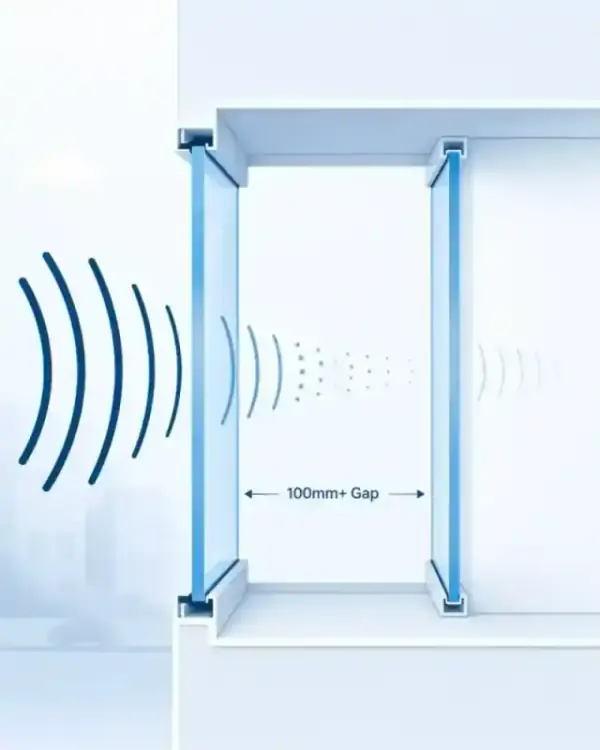
This is where most soundproofing efforts fail. Standard double glazing has a tiny gap (usually 16–20mm). While great for heat, this small gap actually allows the two panes of glass to talk to each other via the air trapped between them. They act like a drum, vibrating in sympathy.
For true silence on a red route, the 100mm gap matters. By creating a cavity of 100mm to 150mm between your original window and the secondary unit, we create a "buffer zone." The air acts as a spring that is too deep for high-frequency tyre screams and low-frequency engine rumbles to easily cross.
3. Structural Decoupling
If you replace your windows with new double glazing, the inner and outer panes are held in the same frame. Vibrations hit the outer pane, travel through the frame, and reach the inner pane.
Secondary glazing is different because it is decoupled. The secondary unit is installed into its own independent frame, often mounted on the timber reveal. This physical separation means the vibration from a passing HGV has no direct path into your home.
Acoustic Glass: The Secret Interlayer
Not all glass is created equal. When we talk about acoustic glass secondary glazing, we’re referring to "laminated" glass.
Think of it as a glass sandwich. Two layers of glass are bonded together by a special Polyvinyl Butyral (PVB) acoustic interlayer. This microscopic layer of plastic does something clever: it absorbs the vibration and turns it into a tiny, unnoticeable amount of heat. This "dampening" effect specifically targets the frequencies of traffic noise that human ears find most annoying.
Why "New" Windows Often Aren't the Answer
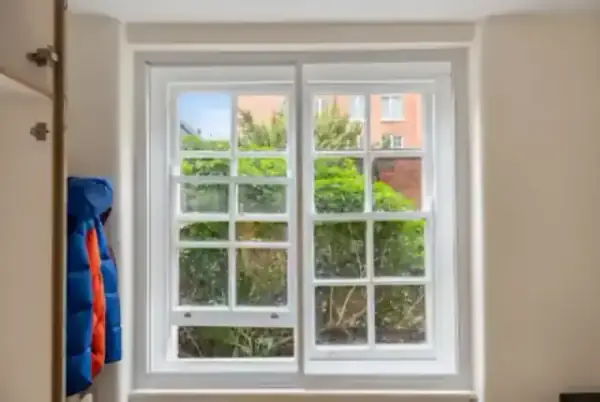
We often see homeowners who spent thousands on brand-new double glazing, only to find the traffic noise is still there. Why? Because most replacement windows prioritize thermal efficiency over acoustics. They use two panes of the same thickness, which creates a "coincidence frequency" where sound passes through almost unimpeded.
Secondary glazing allows us to use asymmetric glazing. By having an original window of one thickness and a secondary pane of a different thickness, we ensure they don't vibrate at the same frequency. It’s a specialized approach that outperforms even the most expensive replacement windows when it comes to raw decibel reduction.
Living the Whisper: A Real-World Result
When we install these systems on a Red Route, the transformation is immediate. You go from hearing the type of car passing by to merely seeing it move.
- Before: 70dB (The roar of an A-road)
- After: ~30dB (The quiet of a country garden)
This 40dB+ reduction is the difference between a home that feels like it’s in the middle of a motorway and a home that feels like a sanctuary. It’s particularly vital for listed buildings and period properties where you aren't allowed to change the external windows but desperately need the internal peace.

Reclaim Your Silence
Living in London shouldn't mean sacrificing your peace of mind or a good night's sleep. The science of soundproofing is on your side, and you don't need a massive construction project to see the benefits. Most of our installations on busy London roads take just a day or two and require no planning permission or messy structural work.
If the red route noise is starting to feel like a permanent houseguest, let’s chat. We can look at your specific window reveals and show you exactly how many decibels we can shave off your daily life.
Ready to turn the London roar into a whisper? Book a professional survey with our specialist team today and see how acoustic secondary glazing can transform your home.
WhatsApp us