If you’ve spent a winter morning in London shivering next to a drafty sash window or a summer night trying to sleep through the hum of the A1, you’ve probably asked yourself: "Is it time to just rip these out and get double glazing?"
It’s a fair question. We’re often told that modern double glazing is the only way to get a warm, quiet home. But for many homeowners: especially those of us living in period properties or conservation areas: the "obvious" solution isn't always the best one. In fact, replacing your original windows can be a massive headache involving planning officers, thousands of pounds in extra costs, and a loss of that historic charm you fell in love with in the first place.
The truth is, you might not need new windows at all. You might just need an extra layer. Let’s look at the real-world comparison between secondary glazing vs double glazing so you can decide what actually makes sense for your home and your wallet.
The Cost Reality: A Comparison That Actually Makes Sense
When we talk about secondary glazing cost, the numbers usually speak for themselves. On average, fitting secondary glazing is about 40-60% cheaper than a full window replacement.
Think about it this way: replacing a traditional timber sash window with a high-quality double-glazed equivalent in London can easily run you £1,200 to £1,800 per opening. If you have a typical terraced house with eight windows, you're looking at a bill that hits five figures before you’ve even bought the installers a cup of tea.
Secondary glazing, by contrast, typically ranges from £300 to £600 per window depending on the size and the type of opening you choose (like a vertical slider to match your sashes). Because we are installing a slim, discreet frame onto the inside of your existing window, the labor is significantly less intensive. There’s no need for scaffolding, no skips sitting on your driveway for a week, and no expensive disposal fees for your old frames.

The Planning Permission Headache
In London, our homes are our pride and joy, but the local council often has a say in what we do with them. If you live in a conservation area or a listed building (of which London has thousands), replacing your windows is rarely a simple "buy and install" job.
Conservation officers are there to protect the street’s character. Replacing original 19th-century sashes with modern uPVC: or even modern timber double glazing: often requires formal planning permission. In many cases, it’s flat-out refused because double-glazed units are naturally thicker and can change the "sightlines" of the building.
This is where secondary glazing becomes a lifesaver. Because it is installed internally, it doesn't change the external appearance of your home one bit. In the eyes of the planning office, it’s often considered a reversible internal decoration or a minor modification. We’ve worked on countless listed buildings where secondary glazing was the only approved way to improve insulation without breaking the law.
The Noise Factor: Why Two Panes Aren't Always Better Than One
Most people assume that brand-new double glazing is the gold standard for peace and quiet. Surprisingly, secondary glazing often outperforms it.
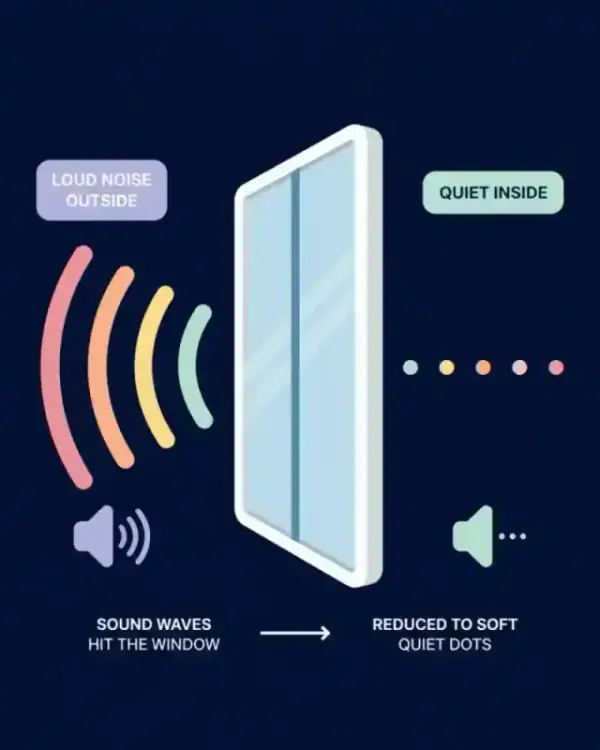
Sound travels through vibrations in the air. Standard double-glazed units have a very small gap between the two panes of glass (usually about 16mm to 20mm). While this is great for heat, it’s not wide enough to stop low-frequency noise like the rumble of a bus or a passing train.
Secondary glazing creates a much larger air gap: usually around 100mm to 150mm: between your original window and the new internal pane. This large "acoustic cavity" acts as a massive dampener. When paired with specialized acoustic glass, you can achieve a noise reduction of 70-80%.
If you’re living on a busy London road, that’s the difference between hearing every conversation on the sidewalk and finally being able to hear your own thoughts.
Thermal Performance: The Battle of the U-Values
We won't sugarcoat it: a brand-new, top-of-the-line double-glazed window will generally have a slightly better U-value (a measure of how much heat escapes) than a single-glazed window with secondary glazing added.
However, the difference in your actual heating bill is often negligible. The biggest enemy of a warm home isn't just the glass; it’s the drafts. Old sash windows are notorious for letting cold air whistle through the gaps. By installing a secondary glazed unit, you are effectively sealing those drafts behind an airtight internal frame.
You’ll notice the difference immediately. That "cold zone" next to the window disappears, and your thermostat doesn't have to work nearly as hard. For a fraction of the price of full replacement, you get roughly 90% of the thermal benefit. In a world where energy bills aren't getting any cheaper, that’s a win for your bank balance.
Life Without the Mess: The Installation Experience
Let's talk about the actual day of installation. Replacing windows is a "major works" event. It involves removing the old frames, which often damages the surrounding plaster, wallpaper, or paint. It’s dusty, it’s loud, and it leaves your home open to the elements while the work is being done.
Secondary glazing is a different story. Because the original window stays in place, the installation is remarkably clean. Most of our London installations take just one or two days. We move a bit of furniture, fit the discreet frames, and tidy up. You don't need to hire a decorator to fix the walls afterward, and you certainly don't need to move out for a week.
Which One is Right for You?
At the end of the day, the choice between secondary glazing vs double glazing usually comes down to three things: your budget, your property's restrictions, and your main problem.
- Go with Double Glazing if: You live in a modern home with no planning restrictions, your current window frames are rotting or structurally unsound, and you have the budget for a total overhaul.
- Go with Secondary Glazing if: You live in a period home or conservation area, you want to achieve 80% noise reduction from city traffic, you want to save 40-60% on costs, or you simply want to keep your beautiful original windows.
We see so many homeowners who feel pressured into expensive replacements they don't actually need. Our advice? Take a look at your windows. If the frames are still solid but the glass is letting you down, secondary glazing isn't just a "budget" alternative: it's often the superior technical solution for the way we live in London today.