

7 Mistakes You’re Making with Noise Reduction Windows (and How to Fix Them)
You’ve spent thousands on new double glazing, or perhaps you’ve hung "soundproof" curtains that weigh as much as a small car, yet you can still hear every word of your neighbor's phone conversation and the low rumble of the number 38 bus.
It’s frustrating, isn't it? You expected a sanctuary, but you got a slightly more expensive version of the same noisy room.
The truth is, most homeowners tackle noise reduction the same way they tackle heat loss, and that is mistake number one. Sound is a completely different beast than temperature. While heat stays in with a thin layer of argon gas, sound is a physical vibration that needs mass and space to stop it in its tracks.
If you’re ready to finally get some sleep, here are the seven most common mistakes we see Londoners making with their "soundproof" windows: and exactly how to fix them.
1. Relying on Standard Double Glazing
This is the most common pitfall. People assume that because double glazing is better than single glazing for heat, it must be the solution for noise.
Standard double glazing is designed for thermal efficiency. It usually features two panes of the same thickness (often 4mm) separated by a very small gap (about 16mm to 20mm). Because the panes are the same thickness, they vibrate at the same frequency. This creates a "sympathetic resonance" where sound waves pass through both panes almost as easily as if they were one.
The Fix: You need secondary glazing. By adding a secondary pane with a different thickness than your original window, you break that resonance. The sound wave hits the first pane, changes frequency, and then struggles to pass through the second.
2. The "Small Gap" Trap
When it comes to stopping noise, the air gap between your glass panes is your best friend. In a standard double-glazed unit, that gap is tiny. For heat, that's fine. For sound? It’s practically non-existent.
To truly decouple the sound vibrations from one side of the window to the other, you need a substantial cavity of air. A gap of 100mm to 150mm is the "sweet spot" where noise reduction starts to feel like magic.
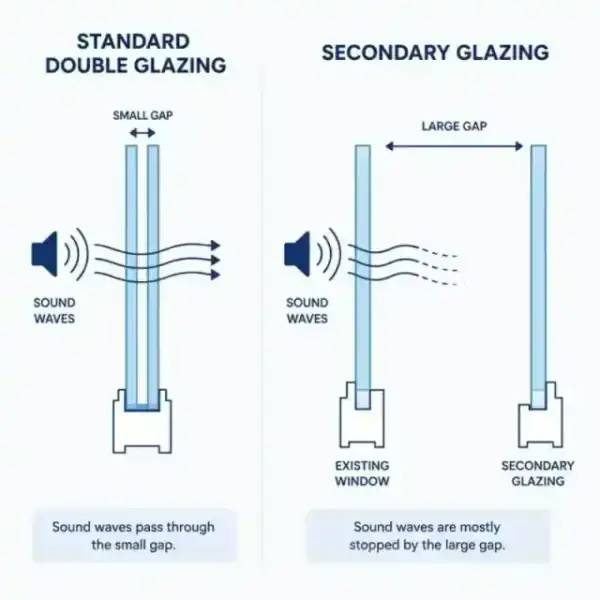
The Fix: This is why secondary glazing is so much more effective than replacing your windows. Because the secondary unit is fitted onto the internal reveal of your window, it naturally creates a large air buffer: often 100mm or more: between the original glass and the new layer. This can lead to a 70-80% reduction in noise, something standard double glazing simply can't touch.
3. Ignoring Acoustic Laminated Glass
Not all glass is created equal. If you’re just using "toughened" or "float" glass, you’re missing out on the heavy lifter of the acoustic world: laminated glass.
Acoustic laminated glass consists of two layers of glass bonded together with a special transparent interlayer (usually PVB). This interlayer acts like a dampening cushion, absorbing the energy of the sound waves instead of letting them vibrate through the pane.
The Fix: When specifying your secondary glazing, ask for acoustic laminated glass. It’s slightly heavier and more expensive, but the difference in decibel reduction is profound. You can read more about why this works in our ultimate guide to acoustic glass.
4. The Trickle Vent & Air Leak Disaster
You could have the thickest glass in the world, but if there’s a hole in your frame, the noise will find it. This is known as "flanking."
Many modern windows come with trickle vents: small plastic slots at the top of the frame designed for ventilation. While great for preventing mold, they are essentially open windows for sound. Similarly, if your original sash windows are drafty, they are also "noisy." If air can get in, sound can get in.
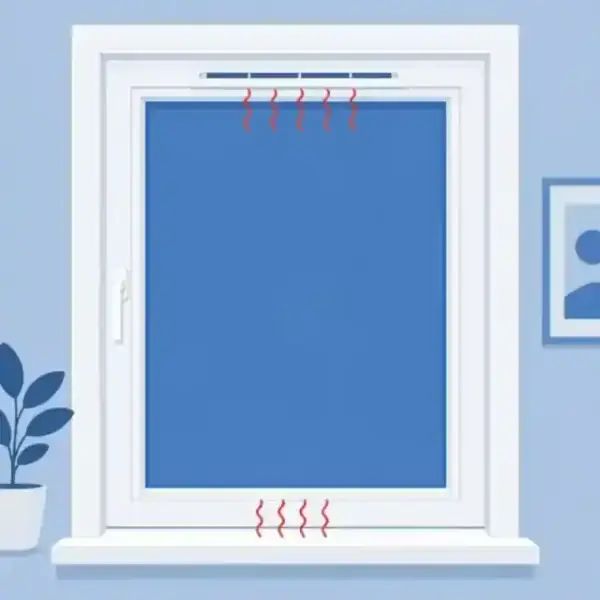
The Fix: Secondary glazing solves this by creating a completely independent, high-performance seal. We use specialized compression seals that ensure the secondary unit is airtight. You can still open your original windows for ventilation when you need it, but when the secondary glazing is closed, the room becomes a sealed acoustic chamber.
5. Thinking "More Panes = Less Noise" (The Triple Glazing Myth)
It seems logical: if two panes are good, three must be better, right? Not necessarily.
Triple glazing is fantastic for keeping a house warm in the Arctic, but for noise, it can actually be worse than double glazing. The extra pane of glass creates two small cavities instead of one large one. These small cavities can act like drums, amplifying certain frequencies of noise.
The Fix: Don’t waste your money on triple glazing for noise reduction. A single layer of high-quality secondary glazing with a large air gap will almost always outperform triple glazing in an acoustic test. It’s also significantly cheaper and less intrusive to install.
6. Losing the Soul (and Value) of Period Homes
London is famous for its Victorian sashes and Georgian casements. A common mistake is ripping these out to replace them with "modern" soundproof windows.
Not only does this often look out of place, but if you live in a listed building or a conservation area, it might even be illegal without planning permission. Furthermore, plastic replacement windows can actually devalue a heritage property.
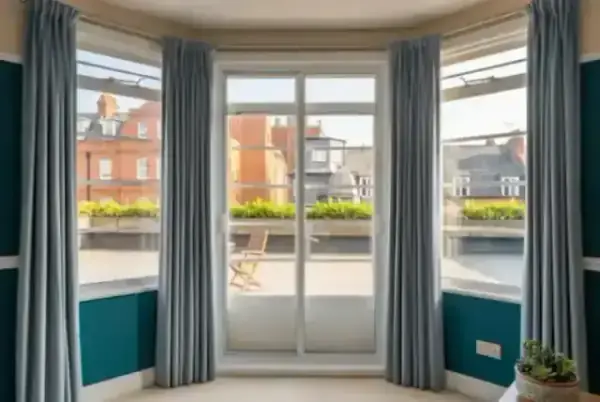
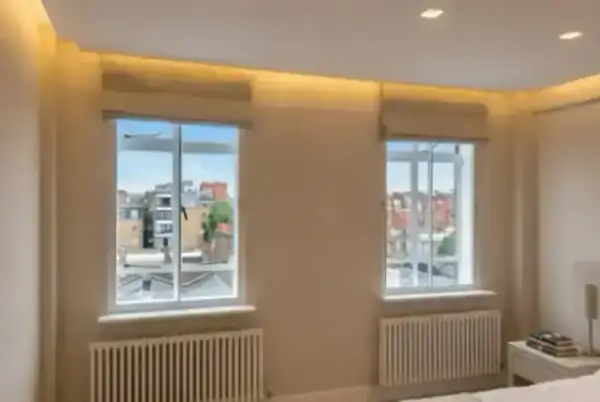
The Fix: Secondary glazing is the "invisible" solution. Because it’s installed on the inside, it doesn't change the exterior appearance of your home at all. We can match the frames to your existing windows so perfectly that most people won't even notice they’re there: until they realize how quiet the room is. It’s a favorite for listed buildings across London.
7. Falling for the "DIY Quick Fix"
We’ve seen it all: foam tape stuck around the edges, heavy "acoustic" blankets hung over the curtain rod, and even DIY plastic film kits.
While these might take the "edge" off the noise, they don't solve the underlying physics of sound transmission. Most of these solutions lack the mass and the airtight seal required to stop urban noise like sirens or aircraft.
The Fix: Treat noise reduction as an investment in your health and property. Proper installation by a specialist ensures that the frames are perfectly square and the seals are under the correct tension. Plus, professional secondary glazing is a permanent, easy-to-maintain feature that adds real value to your home. Check out our Beginner’s Guide to Maintenance to see just how easy they are to live with.
The Bottom Line
Stopping noise isn't about buying the most expensive window on the market; it's about understanding how sound moves. By avoiding these seven mistakes, you can transform your home from a stressful echo chamber into a quiet retreat.
If you're tired of the London roar and want to know exactly which configuration of glass and gap will work for your specific windows, the best next step is a professional survey. We can show you samples of the frames, explain the decibel ratings, and help you find a solution that fits your home’s character and your budget.