
If you live in London, you know the "siren song" all too well: and I don’t mean anything mythical. I’m talking about the 2:00 AM ambulance, the rumble of the night bus, or the persistent hum of the Heathrow flight path. You’ve likely tried everything: heavy curtains, earplugs, even moving your bed to the "quiet" side of the flat.
You look at your windows and wonder, “Why is all that noise still getting through?” Even if you have double glazing, the city has a way of leaking into your living room. The truth is, standard windows are built to keep heat in, not to keep sound out.
If your home feels less like a sanctuary and more like a front-row seat to a traffic jam, here are the 10 reasons your windows are failing you: and how we can finally turn the volume down.
1. The "Drum Skin" Effect (Symmetric Glass)
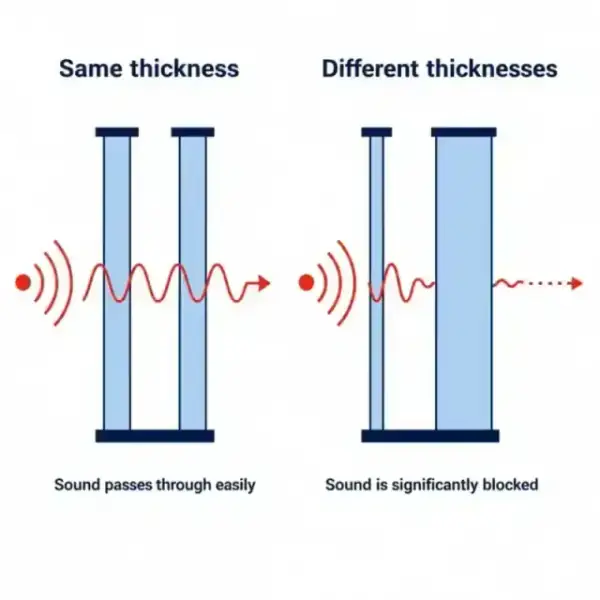
Most standard double-glazed windows use two panes of glass that are the exact same thickness: usually 4mm. While this is great for keeping your toes warm, it’s a disaster for acoustics.
When sound waves hit two identical panes of glass, they vibrate at the same frequency. This creates a "sympathetic resonance," where the noise effectively hitches a ride from the first pane to the second, passing into your home with almost no resistance. It’s like having two drum skins tuned to the same note; hit one, and the other vibrates automatically.
2. Your Air Gap is Too Small
In a standard double-glazed unit, the gap between the two panes of glass is typically 16mm to 20mm. This is the "sweet spot" for thermal insulation (preventing heat from jumping across the gap), but it’s far too narrow to stop sound.
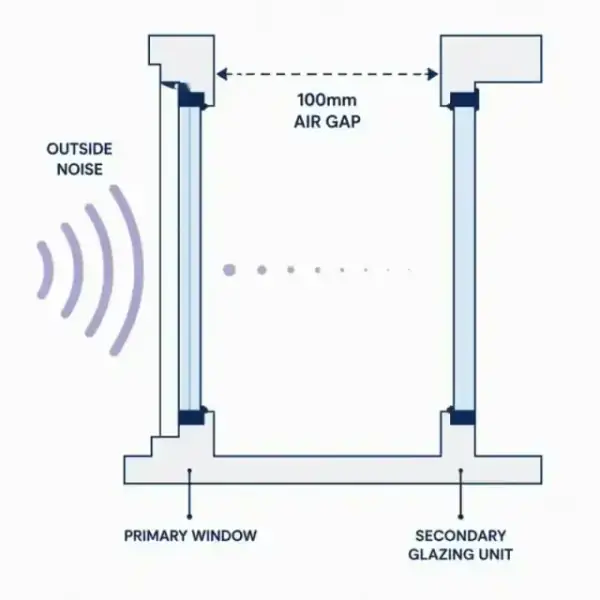
Low-frequency noises, like the deep thrum of a diesel engine or a passing train, can easily "bridge" that small gap. To truly disrupt a sound wave, you need space: specifically, a gap of 100mm or more. This is one of the biggest reasons noise reduction windows are so much more effective when they use a secondary layer.
3. Thin Glass Lacks "Mass"
Physics is pretty straightforward here: the heavier and denser a material is, the harder it is for sound to move it. Most original London sash windows use very thin single-pane glass. Even modern double glazing often uses relatively light panes.
If the glass is thin, the sound waves don't have to work hard to make it vibrate. Without mass, you have no barrier. This is why acoustic glass secondary glazing is a game-changer: it adds significant weight and density specifically designed to absorb those vibrations.
4. The "Sound Tunnel" (Trickle Vents)
Have you ever noticed those little plastic slots at the top of your window frames? Those are trickle vents, designed to help your home breathe and prevent mold. Unfortunately, they are also essentially holes in your wall.
If air can get in, sound can get in. A trickle vent acts as a direct acoustic tunnel, allowing high-frequency noises like wind whistling or distant sirens to bypass your glass entirely. While ventilation is important, standard vents are often the "Achilles' heel" of a quiet room.
5. Aging or Compressed Seals
Windows aren't just glass; they are a system of frames and seals. Over time, the rubber gaskets around your windows can perish, shrink, or become compressed. When a seal loses its "bounce," it no longer creates an airtight fit.
A gap as small as 1% of the window's surface area can let in as much as 50% of the external noise. If you can feel a draft, you are definitely hearing the street.
6. Hollow PVC Frames
Many modern "quick-fix" double-glazed windows use unplasticized polyvinyl chloride (uPVC). While affordable, these frames are often hollow inside.
Unlike solid timber or heavy-duty aluminum, hollow frames don't have the density required to block sound. Noise can travel through the frame itself, vibrating the plastic and entering your room via the windowsill. This is why even brand-new windows can sometimes feel surprisingly "loud."
7. Incorrect Installation
You could buy the world's most expensive "soundproof" window, but if it isn't fitted perfectly, it’s useless. We often see windows where the installer left small gaps around the frame, filling them with standard expanding foam rather than specialized acoustic sealant.
Standard foam is full of air bubbles: great for heat, terrible for noise. Without a solid, airtight perimeter, noise simply "flanks" the window, leaking in through the edges of the wall.
8. The Lack of a Damping Interlayer
Standard glass is rigid. When a sound wave hits it, the glass vibrates like a tuning fork.
Specialized acoustic glass features a "laminated" layer: a thin, clear film of polyvinyl butyral (PVB) sandwiched between two sheets of glass. This interlayer acts as a dampener, soaking up the energy of the sound wave and preventing the glass from vibrating. If your windows don't have this, they are essentially transparent speakers for the outside world.
9. Original Sash Window Gaps
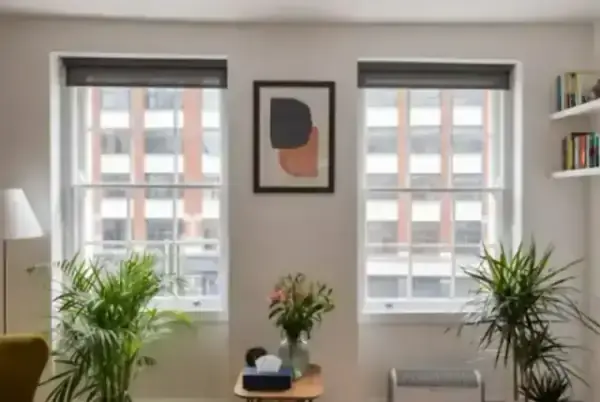
In London’s beautiful period homes, original sash windows are a major culprit. Because they need to slide up and down, there must be a slight clearance between the sash and the frame.
Without a modern brush seal or draught-proofing system, these gaps are basically open windows. Even with a "staff bead" pile, the meeting rail (where the two sashes touch) is rarely airtight.
10. The Frequency Problem
Different types of noise require different solutions. High-frequency noise (birds, wind) is easy to block with simple seals. Low-frequency noise (buses, planes, construction) is much harder.
Most windows are tested for general noise, but they aren't optimized for the specific low-frequency rumbles common in urban environments. If your windows aren't specifically rated for acoustic performance, they likely aren't touching those deep, vibrating sounds that keep you awake.
How to Fix It: The Power of the "Second Barrier"
Now that we know why your windows aren't working, let's talk about the fix. You might think the answer is to rip them out and start over, but in London, that’s often expensive, messy, or: if you live in a listed building: illegal.
The most effective way to achieve a 70-80% noise reduction is through secondary glazing. Here is how it addresses all 10 problems at once:
Creating a Massive Air Gap
By installing an independent window on the inside of your existing one, we create a substantial air cavity (often 100mm to 150mm). This gap is the single most important factor in stopping low-frequency noise. The sound wave hits the first window, enters the "buffer zone" of the air gap, loses its energy, and is finally stopped by the second barrier.
Utilizing Dissimilar Glass
When we install soundproof windows in London, we never use the same glass thickness as your original window. If you have 4mm glass outside, we might use 6.4mm or 8.8mm acoustic laminated glass inside. This "breaks" the resonance, ensuring sound waves can't easily pass through both layers.
Airtight Independent Sealing
Our secondary units come with their own high-performance frames and seals. Because this unit doesn't have to deal with the elements (rain/wind) like the outer window, we can focus entirely on an airtight acoustic seal. This effectively "wraps" your room in a secondary acoustic envelope.

Why This Matters for Your Home (and Your Wallet)
Beyond just the silence, secondary glazing is typically 40-60% cheaper than full window replacement. Since we aren't removing your original windows, there is no scaffolding required, no re-decorating, and usually, the whole job is done in a day or two.
For those in conservation areas or listed properties, it's the perfect solution. You keep the beautiful heritage look of your original sashes on the outside, while enjoying modern, library-quiet peace on the inside.
Ready to Turn Down the City?
If you're tired of hearing your neighbor's car every morning or the constant drone of traffic, it's time to look beyond standard double glazing. Whether you need hinged, sliding, or bespoke units, we can help you find the right balance for your home.
Don't settle for "standard" when your environment is anything but. Let's make your home the quiet sanctuary it was meant to be.